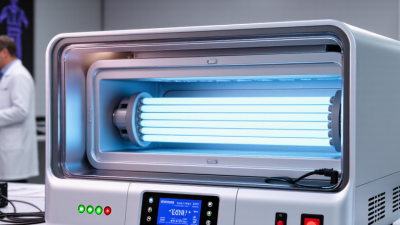
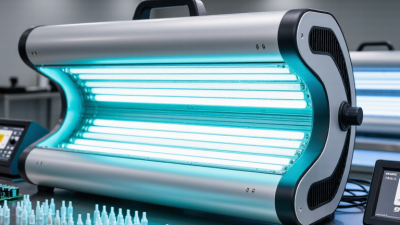
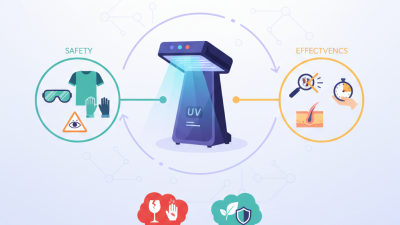
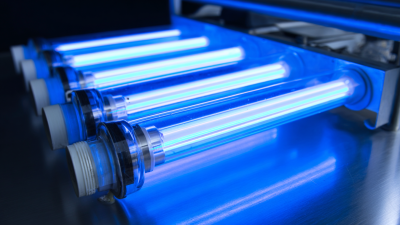
Ultraviolet Light System buyers face a crowded market, but product claims alone are not enough. A unit may look powerful on paper and still perform poorly in a real room. Wavelength, dose, exposure time, airflow, sensor design, maintenance, and independent testing all matter. So does the intended use: water treatment, air disinfection, or surface treatment.
The World Health Organization’s 2019 tuberculosis infection-prevention guidelines say upper-room ultraviolet germicidal irradiation may be used as an adjunct in settings with high transmission risk. The recommendation is conditional, and the evidence certainty is very low. That caveat matters. It shows why buyers should check application-specific evidence rather than assume every UV device delivers the same protection. Dr. William A. Rutala’s published guidance likewise treats UV-C as a supplement to effective manual cleaning, not a replacement.
This Top 10 comparison is designed for global buyers assessing performance, safety features, service support, and documentation—not just price. Look for published test methods, clear installation requirements, lamp or LED replacement details, and realistic maintenance schedules. A dusty sleeve, a poorly positioned sensor, or an undersized unit can undermine a promising specification. Small details count.
No single model suits every site. Our comparison helps narrow the field, while leaving room for buyers to verify local technical requirements and request evidence from suppliers. We also flag where public data is limited. That is not a flaw to hide; it is a reason to ask better questions before purchasing.
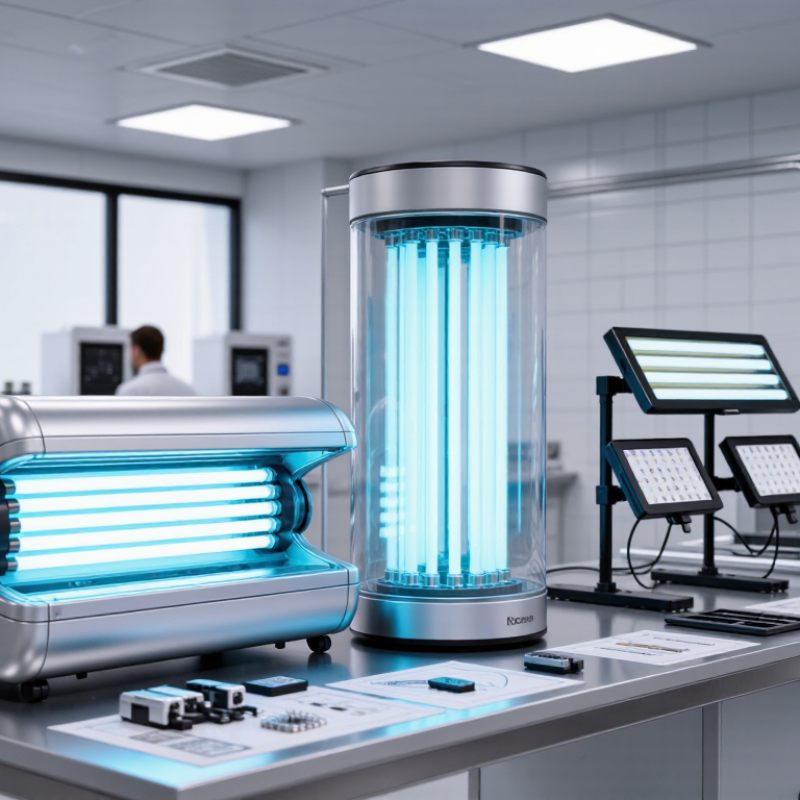
Ultraviolet systems often use UV-C near 254 nanometres, a wavelength that damages the genetic material of many microbes. The CDC and NIOSH’s upper-room UVGI guidance explains that effectiveness depends on dose, exposure time, airflow, and humidity. In practice, a lamp’s rated output alone cannot predict how much airborne material is inactivated. Air must pass through the irradiated zone.
Evidence is encouraging, but context matters. A 2009 PLOS Medicine study by Escombe and colleagues reported about 70% lower tuberculosis infection among guinea pigs exposed to air from rooms using upper-room UVGI. That result reflects a specific hospital setting, not a guaranteed reduction for every room or system. Real rooms are messy. Furniture, poor air mixing, dust, and lamp ageing can change performance. ASHRAE guidance also treats UV-C as a supplementary air-cleaning measure, not a substitute for ventilation or routine maintenance. Buyers should look for measured irradiance, clear installation instructions, and a maintenance plan. One detail is easy to overlook: UV-C exposure can injure eyes and skin, so shielding and careful commissioning matter. That gap between laboratory performance and daily operation deserves more attention.
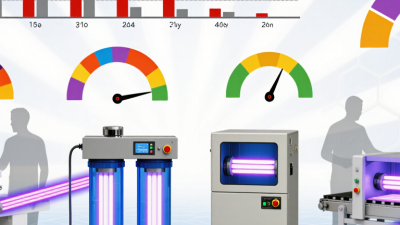
The chart compares photon energy at ten reference UV-C wavelengths, calculated using E = hc/λ. Low-pressure mercury lamps commonly emit near 253.7 nm, while UV-C LEDs are available across wavelengths such as 265–280 nm. Photon energy alone does not indicate germicidal performance: effectiveness depends on delivered UV dose, exposure conditions, and the target microorganism.
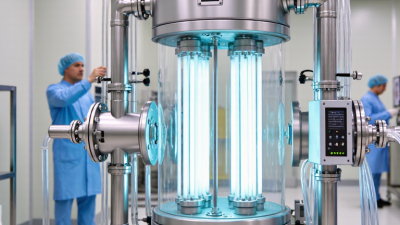
UV systems differ by application, flow rate, and lamp design. Point-of-use units serve a single tap; whole-house systems treat water entering a building. Municipal drinking-water units handle larger, steady flows, while wastewater-reuse systems require dose control suited to changing water quality. Open-channel systems expose flowing water across a channel. Closed-vessel industrial units keep water inside a chamber. Flow matters.
For higher capacities, modular banks place several lamps in parallel, allowing treatment capacity to match plant demand. Low-pressure lamps are common in compact systems, while high-output amalgam lamps suit greater flows in smaller footprints. Medium-pressure lamps emit a broader range of UV wavelengths and may fit specialized treatment needs. UV-LED units offer compact layouts, but their performance and operating requirements differ from traditional mercury lamps.
Selection should account for more than the flow rating printed on a specification sheet. Ask for validated dose data at the intended flow, water UV transmittance, and expected operating conditions. Turbidity or fouling can reduce light reaching target organisms. A sensor, cleaning method, and lamp-replacement plan matter in daily operation. Sometimes buyers focus too much on peak capacity; a smaller unit may be more dependable when actual demand is low. Check maintenance access before installation. It is easy to overlook.
UV dose describes the energy delivered to a surface or fluid, usually in millijoules per square centimetre (mJ/cm²). In a simple, steady exposure, dose equals irradiance in mW/cm² multiplied by exposure time in seconds. Real systems are less tidy. In a flowing reactor, water speed, UV transmission, lamp output, and reactor geometry affect how much energy each portion receives. A single average can hide low-dose paths. Numbers can mislead.
For global buyers, a dose claim matters most when its test conditions are clear. Ask whether performance was validated at the stated flow rate and UV transmittance, and whether lamp aging or sleeve fouling was considered. Independent testing or a documented validation protocol offers stronger evidence than a control-panel reading alone. A sensor can track intensity, but it does not directly measure every particle’s exposure. That distinction is easy to miss.
Look for operating limits, calibration records, and maintenance instructions that match the intended installation. Compare systems using the same target dose and water conditions, not headline figures alone. Even careful validation cannot remove every uncertainty; actual water quality changes, and cleaning schedules slip. That is a practical weakness worth acknowledging, not hiding.
UV dose, also called fluence, is commonly expressed in mJ/cm². A simplified calculation is UV intensity (mW/cm²) × exposure time (seconds). In flowing systems, the delivered dose depends on factors such as flow rate, UV transmittance, reactor hydraulics, lamp output, and sensor condition.
| Rank | System Type | Typical Application | Common UV Source | Dose Reference (mJ/cm²) | What Performance Validation Should Check |
|---|---|---|---|---|---|
| 1 | Point-of-Use Drinking-Water System | Treatment at a single tap or dispensing point | Low-pressure mercury lamp, commonly near 254 nm | NSF/ANSI 55 Class A systems are tested to deliver a minimum UV dose of 40 mJ/cm² under specified test conditions. Class B systems are intended for supplemental treatment and use a 16 mJ/cm² dose requirement. | Confirm the applicable standard and class; check validated flow, UV transmittance, UV sensor response, alarms, and lamp-life conditions. |
| 2 | Municipal Drinking-Water Reactor | Disinfection of public water supplies | Low-pressure, low-pressure high-output, or medium-pressure lamps | There is no single dose suitable for every plant. Regulatory requirements and validated operating targets depend on the treatment objective and target organisms; 40 mJ/cm² is a commonly used reference value, not a universal rule. | Look for full-scale reactor validation across the approved flow range, UV transmittance, lamp status, sensor limits, and validated reduction-equivalent dose (RED). |
| 3 | Wastewater Disinfection System | Final effluent treatment before discharge or reuse | Low-pressure high-output or medium-pressure lamps | Set by discharge or reuse requirements, water quality, and target microorganisms; a universal dose value should not be assumed. | Evaluate validation at representative flow and water quality, including suspended solids, UV transmittance, lamp fouling, channel hydraulics, and dose monitoring. |
| 4 | Ballast-Water Treatment System | Shipboard treatment of ballast water to manage aquatic organisms | Usually medium-pressure UV lamps; system designs vary | No single dose applies across all systems or operating conditions. Performance is assessed under the relevant ballast-water approval and testing framework. | Check approval status, validated treatment capacity, water-quality operating limits, flow interlocks, and performance in the system’s approved operating modes. |
| 5 | Food and Beverage Process-Water System | Treatment of ingredient water, rinse water, or process water | Low-pressure lamps near 254 nm; UV LED options may be used in some applications | Application-specific. The dose must be established for the target organism and actual water quality rather than selected from a generic value. | Verify dose at the specified flow and UV transmittance, hygienic design, cleanability, sensor calibration, and suitability for the intended product-contact use. |
| 6 | Pharmaceutical Water-System UV Unit | Microbial control or other validated UV treatment within a pharmaceutical water loop | Low-pressure mercury lamps near 254 nm; wavelength-specific systems may serve other process functions | Defined by the validated process and intended function. A dose for microbial control should not be confused with UV use for other purposes, such as reducing certain chemical contaminants. | Review installation and operational qualification, validated flow and dose conditions, sensor calibration, alarm handling, maintenance controls, and documented change control. |
| 7 | Pool and Spa UV System | Supplemental treatment in recirculating pool or spa water | Low-pressure or medium-pressure UV lamps | Depends on the system’s claimed treatment function and applicable local requirements. UV is generally used as a supplement to, not a replacement for, required residual disinfectant. | Check validated flow and water-quality limits, compatibility with the circulation system, lamp and sensor status, and continued compliance with residual-disinfection requirements. |
| 8 | Upper-Room UVGI System | Air disinfection in occupied indoor spaces using fixtures above the occupied zone | Germicidal UV-C sources, commonly around 254 nm | Airborne dose depends on irradiance and the time an airborne particle spends in the irradiated zone. A water-reactor dose value cannot be directly applied to room air. | Assess room geometry, air mixing, fixture output, installation height, exposure limits for occupants, and measured or modelled performance under the intended ventilation conditions. |
| 9 | In-Duct HVAC UV System | Air treatment inside ventilation or air-handling equipment | Germicidal UV-C lamps, commonly around 254 nm | Depends on air velocity, irradiance, and exposure time. Surface-treatment installations inside equipment have different exposure conditions from moving-air treatment. | Confirm the intended claim, duct airflow and residence time, lamp placement, material compatibility, access controls, and protection against unintended UV exposure. |
| 10 | Conveyor or Surface-Treatment UV System | Treatment of exposed product or packaging surfaces in controlled production settings | UV-C lamps or UV-C LEDs, depending on the process | Surface dose varies with distance, exposure time, angle, shadowing, and surface properties; it must be measured or validated for the specific line and target. | Check dose uniformity across the treatment area, conveyor speed, product orientation, shadowed regions, sensor calibration, and safety interlocks. |
Buyer’s note: A stated lamp power or calculated dose alone does not prove treatment performance. Prefer independently validated operating limits and documented RED or application-specific performance data. For drinking water, NSF/ANSI 55 class requirements and local regulations should be checked against the exact intended use.
For global buyers comparing ultraviolet systems, NSF/ANSI 55 benchmarks offer a useful starting point. Class A systems are evaluated at a minimum dose of 40 mJ/cm², while Class B systems use 16 mJ/cm². These figures describe delivered UV dose under defined test conditions, not simply the lamp’s advertised power. Class A is intended to disinfect microbiologically contaminated water; Class B provides supplemental treatment for water that is already disinfected. The distinction matters. A higher number alone cannot determine whether a system suits a particular water source.
Check the certified model, rated flow, and operating limits. At higher flow rates, water spends less time under UV light, which can reduce the delivered dose. Cloudiness, low UV transmittance, and a dirty quartz sleeve can also interfere with treatment. Ask whether performance was verified at the stated flow and under realistic water conditions. Small details count. A clear display helps, but it does not replace maintenance or testing. I would not treat a printed dose figure as a guarantee: actual water quality changes, and real installations are rarely as tidy as test conditions.
Top 10 Ultraviolet Light Systems for Global Buyers
Global Buyer Criteria: Certification, Maintenance, Compatibility, and Operating Cost
Global buyers should compare validated performance, not advertised lamp wattage. The U.S. EPA’s 2006 UV Disinfection Guidance Manual links reliable treatment to validated dose, flow, water transmittance, and lamp condition. For drinking-water systems, NSF/ANSI 55 sets benchmarks: Class A systems deliver at least 40 mJ/cm²; Class B systems deliver 16 mJ/cm². Confirm that the certification matches the intended use.
Compatibility is physical as well as electrical. Measure pipe diameter, connection type, pressure range, controller voltage, and installation clearance before ordering. Ask for performance data at your actual peak flow and water quality. A system that fits the pipe may still be undersized. Small details matter.
Maintenance affects both reliability and cost. The EPA manual addresses lamp aging, sleeve fouling, and sensor checks; request clear service intervals and replacement-part availability. Estimate annual electricity using rated watts × daily operating hours × 365, then add lamps, cleaning labor, and calibration. The estimate is imperfect: fouling and operating patterns can change costs. A low purchase price may not stay low when compatible parts are difficult to source.