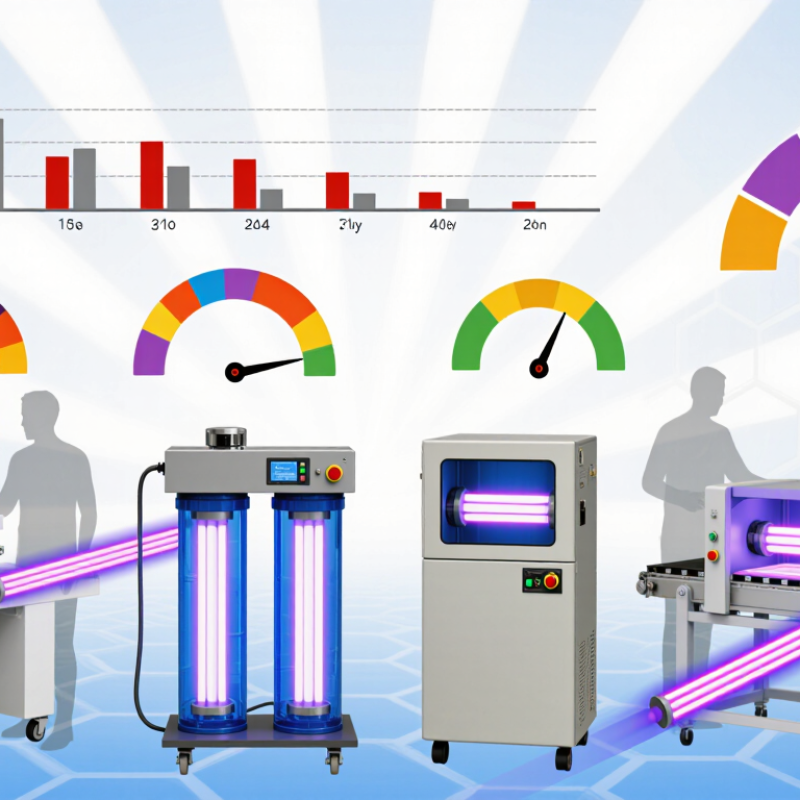
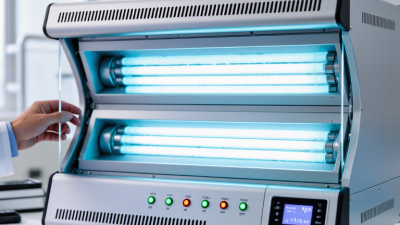
Choosing a Uv Radiation Machine in 2026 starts with one practical question: what must it do? A unit designed for curing coatings is not interchangeable with equipment for water, air, or surface treatment. Match the machine to its intended use, then check its wavelength, irradiance, dose, coverage, and operating distance. Those details matter more than a broad “high output” claim.
Reliable evidence also belongs in the decision. The WHO reported that ultraviolet exposure contributed to an estimated 1.5 million non-melanoma skin cancer cases and 120,000 melanoma cases worldwide in 2020. IARC’s Monographs, Volume 100D, classifies ultraviolet radiation as carcinogenic to humans. These findings do not mean every UV device carries the same risk; they do make shielding, interlocks, maintenance, and clear operating instructions essential selection criteria. For germicidal applications, David J. Brenner and co-authors wrote, “Far-UVC light has the potential to be a safe and efficient way to prevent the spread of airborne-mediated microbial diseases” (Scientific Reports, 2018). That statement concerns specific far-UVC research, not every machine or setting.
Look for independent test results, calibration records, and a stated measurement method. Ask how performance changes as lamps age or dust gathers on a reflector. Small details count. A specification sheet can still mislead if it omits test conditions. I would compare the intended dose with verified output, then confirm that the supplier explains safe installation and routine checks. The choice is not always obvious. That is worth admitting. A careful comparison can expose gaps before purchase, though no checklist replaces application-specific evaluation.
Understanding UV Radiation Machines and Their Main Types
How to Choose a UV Radiation Machine in 2026?
Understanding UV Radiation Machines and Their Main Types
UV radiation machines use different wavelengths for different tasks. UV-A is common in curing coatings and fluorescent inspection. UV-B is used in some controlled treatment settings. UV-C systems are often designed to reduce microbes on exposed surfaces or in air and water. They are not interchangeable. A device’s purpose, wavelength, output, and exposure time all affect performance. Shadows, dust, and uneven surfaces can reduce UV-C exposure. Direct UV-C exposure can injure eyes and skin, so shielding and reliable safety interlocks matter.
Before choosing, consider the area being treated, operating distance, cycle time, and whether objects can pass through a shielded enclosure. For curing, verify compatibility with the coating and substrate; excess exposure may damage some materials. For any system, look for clear operating instructions and a maintenance plan. Lamps can lose output over time, even when they still appear bright. One detail is easy to miss: a tidy test result in one spot may not represent the whole treatment area. Use measurements at relevant positions, and seek qualified guidance for specialized or health-related applications.
Defining the Intended Application and Required UV Spectrum
Choosing a UV machine begins with its job, not its advertised output. A unit for surface curing needs a different spectrum from one designed for air or water treatment. Inspection systems may also require UV-A rather than germicidal UV-C. WHO’s UV radiation fact sheet classifies UV-A as 315–400 nm, UV-B as 280–315 nm, and UV-C as 100–280 nm. These bands are not interchangeable. A mismatch can leave a process ineffective or damage sensitive materials.
For disinfection applications, IUVA guidance commonly identifies 200–280 nm as the UV-C range. But wavelength alone does not establish performance. Check irradiance at the actual target, exposure time, distance, and shadowing; dose depends on both light intensity and time. Ask for test results under conditions resembling your setup, and verify them with a suitable radiometer. A clear reading at the lamp is not the same as a validated dose on a shaded surface. That detail is easy to overlook.
Tips: Write down the target, material, treatment area, and cycle time before comparing machines. Match the measured spectrum to the application, then confirm output at the working distance. If the application is unclear, pause and seek qualified guidance.
How to Choose a UV Radiation Machine in 2026? — Define the Intended Application and Required UV Spectrum
How to read this chart: Match the machine’s emission spectrum to the application. UVC spans 100–280 nm, UVB 280–315 nm, and UVA 315–400 nm. The plotted wavelengths are representative examples: 254 nm is commonly used in low-pressure mercury germicidal lamps; 222 nm is used in specialized far-UVC systems; 311–313 nm is a common narrowband UVB phototherapy range; and 365–395 nm are common UVA curing wavelengths. Actual performance also depends on irradiance, exposure time, distance, and material compatibility. UV exposure can harm eyes and skin; follow applicable safety requirements.
Comparing Output, Coverage, Controls, and Safety Features
When choosing a UV radiation machine, compare measured UV output, not electrical wattage alone. The Illuminating Engineering Society’s 2020 GUV FAQ identifies 254 nm as a widely used germicidal wavelength. Ask for the device’s wavelength range and irradiance data, measured in µW/cm² at stated distances. Dose depends on irradiance and exposure time. A strong reading beside the lamp can mean little across a room. Check coverage maps for corners, shelves, and shaded surfaces. CDC guidance also cautions that germicidal UV should not replace appropriate ventilation or other infection-control measures. Small detail, big consequence.
Controls shape real-world performance. Look for clear cycle timers, status indicators, and safeguards that prevent accidental exposure, such as occupancy sensing or door interlocks where appropriate. Confirm that the manual explains the intended setting and safe operating distance. For air-treatment systems, ask how airflow and mixing affect exposure; for surface-treatment units, consider furniture and object shadows. A published test method, such as those covered by ASHRAE Standard 185.1 for air-cleaning devices, makes performance claims easier to assess. I still find coverage estimates less convincing when they omit room layout. Ask for test conditions, maintenance intervals, and a way to verify output over time.
Checking Certifications, Maintenance Needs, and Operating Costs
How to Choose a UV Radiation Machine in 2026?
Before comparing prices, verify the machine’s safety documentation. For UV-C equipment, ask for test records against ISO 15858 and IEC 62471, where applicable. Check that the report covers the exact model, not just a similar product family. A certificate alone is not proof of safe installation. Confirm shielding, interlocks, warning labels, and exposure controls during commissioning. Small details matter.
Maintenance figures deserve the same scrutiny. The U.S. EPA’s Ultraviolet Disinfection Guidance Manual identifies lamp aging, sleeve fouling, and water quality as factors affecting delivered UV dose. Though written for water systems, its lesson is useful: request a maintenance schedule tied to measured output, not calendar reminders alone. Ask how often sensors need calibration, what replacement parts cost, and whether cleaning requires shutdown. Downtime has a price.
Estimate annual energy use from measured input power, operating hours, and your local tariff. The U.S. Energy Information Administration reported an average commercial electricity price of about 12.75 cents per kilowatt-hour in 2023; actual rates vary by location and contract. At 1 kW running 4,000 hours, that benchmark equals about $510 yearly, before maintenance. Put labor, lamps, filters, calibration, and disposal into the same worksheet. A spreadsheet still misses downtime. Recheck its assumptions after the first operating quarter.
Selecting a Machine That Meets Your Application and Safety Requirements
How to Choose a UV Radiation Machine in 2026?
Start with the application, not the lamp. Curing coatings, inspecting surfaces, and treating air or water require different wavelengths and exposure levels. UVA, UVB, and UVC are not interchangeable. Ask for measured irradiance at the actual working distance, plus information on exposure uniformity and warm-up time. A reading taken beside the lamp may not represent what reaches a moving product.
Safety features should match the way the machine will be used. Look for a fully enclosed exposure area, reliable door interlocks, clear status indicators, and an accessible emergency stop. UV exposure can harm eyes and skin, sometimes before discomfort becomes obvious. Never rely on tinted windows or protective eyewear as the only safeguard. Check whether the lamp can produce ozone, and whether ventilation is needed. Small details matter.
Consider maintenance before buying. Lamp output can decline with use, and dust on reflectors or optical windows can reduce performance. Ask how output is checked, how often calibration is recommended, and whether replacement parts are readily available. Confirm that the machine fits your workpiece size and production pace. A sample run is useful. It may also reveal uneven coverage that a specification sheet misses. Be ready to revise your assumptions.