Choosing the right Uv Curing Flood Lamp in 2026 requires more than comparing wattage and price. Global buyers must match lamp performance with resin chemistry, substrate size, production speed, and local operating conditions. A lamp that cures a small printed part evenly may struggle with a wide panel or a deep coating. Wavelength matters. Many systems operate near 365, 385, 395, or 405 nanometers, but the correct choice depends on the photoinitiator and material formula.
This guide examines LED, mercury-based, air-cooled, water-cooled, and modular flood lamp types. It considers irradiance, uniformity, working distance, heat management, service life, controls, and replacement costs. Practical details matter, such as a stable mounting frame, clean optical windows, and measured energy at the curing surface. They influence daily results more than impressive catalog numbers. Look for documented testing, traceable specifications, safety features, and supplier support in your region. Certifications should be verified for the destination market, not assumed from a familiar logo.
There is no universal best lamp.
Real factories often face uneven coatings, reflective materials, or limited ventilation. These conditions can expose weaknesses that laboratory tests overlook. Even experienced buyers may need a trial cure before placing a large order. This article offers a careful comparison for international purchasing decisions, while recognizing that equipment data can vary between brands and applications. Reliable selection comes from evidence, repeatable testing, and honest review of production needs.
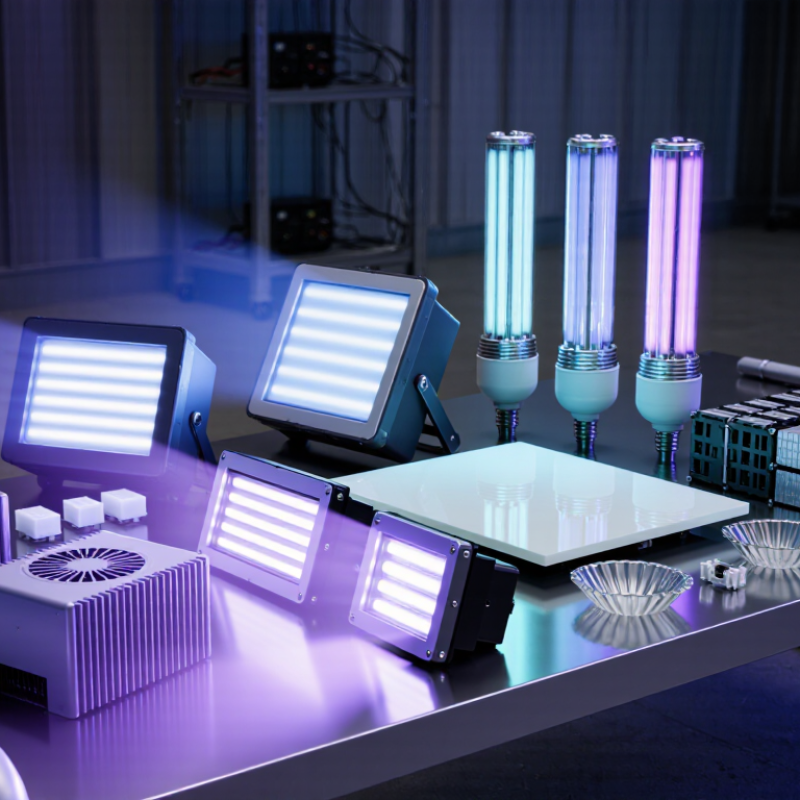
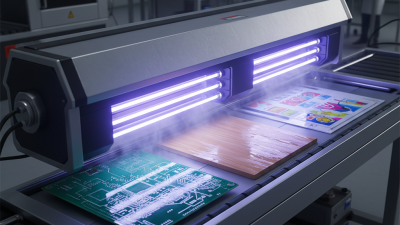
A UV curing flood lamp is a broad-area light source that hardens coatings, inks, adhesives, and resins. Unlike a narrow spot lamp, it spreads ultraviolet energy across a wider working surface. This makes it useful for panels, printed sheets, electronic assemblies, and irregular parts.
The lamp works through photopolymerization. Photoinitiators in the material absorb specific UV wavelengths and create reactive molecules. These molecules link the liquid formula into a solid film. Common ranges include 365, 385, 395, and 405 nanometers. The correct wavelength depends on the formulation, not personal preference. LED flood lamps offer lower heat and precise wavelength control. Mercury-vapor lamps provide broader output but may require stronger ventilation, cooling, and maintenance.
In practical testing, measure irradiance in watts per square centimeter and dose in joules per square centimeter. Distance, surface angle, lamp aging, and temperature can change the result. A coating may feel dry while remaining soft underneath. That mistake is surprisingly common. I would test several exposure times and inspect adhesion after cooling. Keep the lamp shielded, use interlocks, and protect skin and eyes from direct or reflected UV. Do not rely only on the supplier’s rated power. Real output can fall with distance, dirty windows, or poor heat control. The calculation looks simple, but production surfaces rarely behave perfectly.
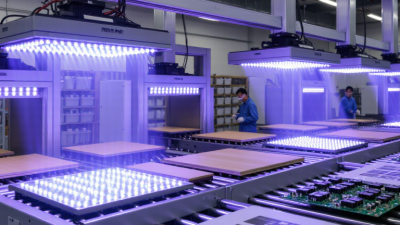
UV curing flood lamps are selected by spectrum, irradiance, working distance, and substrate sensitivity. The main types include UV LED flood lamps, mercury-based arc lamps, and metal-halide lamps. UV LED systems commonly emit at 365, 385, 395, or 405 nanometers. They suit adhesives, printed inks, coatings, and electronic assemblies requiring controlled heat. Mercury and metal-halide lamps provide broader UV output, which can help cure formulations containing several photoinitiators.
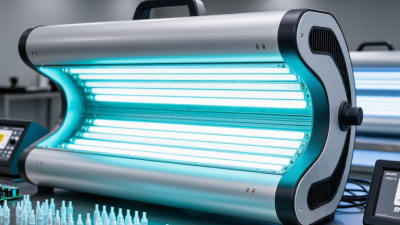
Not all wavelengths match. UV LED flood lamps generate less infrared heat and offer fast switching, making them practical for heat-sensitive plastics and compact production lines. However, their curing area may be less uniform if the optical design is weak. Arc lamps can cover wider surfaces and support thicker coatings, but they often require cooling, lamp replacement, and stronger shielding. For large panels, a reflective flood chamber can improve exposure consistency around edges and recessed areas.
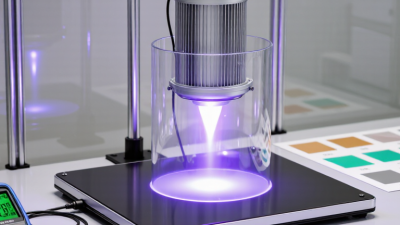
Application testing should measure irradiance and total dose with a calibrated radiometer. A bright lamp is not automatically an effective lamp. Check the resin supplier’s recommended wavelength range, then compare it with the lamp’s measured output. In field evaluations, surface curing may appear complete while deeper layers remain soft. This is an easy mistake. Operators should also control distance, conveyor speed, temperature, and ventilation. UV protection, interlocks, and documented maintenance support safer and more reliable installation.
Choosing a UV curing flood lamp starts with the material, not the lamp housing. Many coatings respond mainly to UVA wavelengths near 365, 385, 395, or 405 nanometers. Check the formulation’s photoinitiator range before comparing prices or wattage. A lamp can look powerful yet cure poorly if its wavelength misses the chemical response peak.
Measure irradiance at the work surface, not only at the LED window. Power density is commonly shown in watts per square centimeter, while curing dose equals irradiance multiplied by exposure time. For example, a 1 W/cm² lamp running for 10 seconds delivers about 10 J/cm², assuming stable output. Distance matters. A small height increase can reduce intensity and create soft edges. Flood lamps with wider coverage may improve consistency, but they often deliver less energy per square centimeter.
In practical testing, place a calibrated radiometer across the center and corners. Compare surface hardness, tackiness, adhesion, and cure depth after identical exposure. Thick clear layers may need longer wavelengths or staged curing. Dark pigments can absorb UV and leave the lower layer under-cured. Heat also changes results, especially on thin plastics. I have seen a fast surface cure hide weak adhesion underneath. That mistake is easy to repeat. Buyers should request wavelength tolerance, measured irradiance, cooling method, operating voltage, and test data at the intended distance. Specification sheets are useful, but real substrate trials remain essential.
Global buyers should match a UV flood lamp to the curing chemistry, not simply choose the highest power. UV wavelength is critical because coatings, inks, and adhesives respond to different spectral ranges. A lamp may appear strong but cure slowly if its output misses the material’s absorption peak. Ask for measured irradiance at the working distance. Marketing wattage alone is not enough.
Coverage also matters. Measure the cure area, lamp height, and product shape before ordering. Uneven light can leave soft edges or sticky corners. In practical testing, place indicator strips across the full surface. Check the center and outer edges. Small gaps often reveal bigger problems.
Airflow deserves attention too. Poor heat control may distort plastic parts or shorten lamp life. Water-cooled systems can help, but they add maintenance and shipping complexity.
Global purchasing requires more than technical performance. Confirm input voltage, plug standards, control interfaces, spare-part availability, and packaging quality. Clear manuals should explain installation, shielding, eye protection, and emergency shutdown. Ask for test data from a recognized laboratory when safety claims affect workplace use. Certification requirements differ by destination, so local review remains necessary.
I have seen buyers overlook customs paperwork and delay production for weeks. That mistake is avoidable, though not always. Request a sample cure trial, record exposure time, and compare hardness, adhesion, and surface finish before committing to a large order.
UV curing flood lamps in 2026 require more than high irradiance. Buyers must connect lamp selection with worker safety, maintenance routines, and local compliance.
Most curing systems use UVA wavelengths between 365 and 405 nanometers.
These are not the same as germicidal UVC sources. Still, direct exposure can harm eyes and skin. Ask suppliers for photobiological safety data, electrical test reports, and documented wavelength output.
IEC 62471 can support optical risk evaluation, while local electrical and workplace rules may require additional testing.
A shielded curing area, interlocked access door, and warning label should be practical requirements, not optional upgrades. Workers need suitable eye and skin protection.
Maintenance affects curing quality and operating cost.
Dust on a quartz window can create uneven curing, especially near the lamp edges. Inspect lenses weekly in dusty workshops. Clean them only with approved materials.
Record irradiance readings at the working distance, not only at the lamp surface.
Replace aging fans, filters, and damaged cables promptly. Small errors become expensive defects.
Purchasing teams should compare usable irradiance, curing width, cooling design, service access, and replacement-part availability.
A bright lamp may still perform poorly across a wide conveyor. Request sample curing tests using the actual resin, substrate, and production speed.
Supplier claims are useful, but independent verification is safer.
I would also question unusually long service-life promises. Real factories are rarely as clean as brochures suggest.