Leave Your Message

What Are the Top UV Drying Light Suppliers in China?

Choosing among China’s top Uv Drying Light suppliers requires more than comparing prices or browsing polished product pages. A reliable supplier should demonstrate stable irradiance, accurate wavelength control, thermal management, and repeatable curing results. These details matter when coatings must dry evenly across wood panels, printed films, electronics, or industrial parts.

Dr. Robert D. Mehnert, a respected UV-curing specialist, emphasized this practical principle: “Successful curing depends on matching light, chemistry, distance, and dose.” His view remains highly relevant. A powerful lamp may still produce weak results when its spectrum does not suit the coating. Supplier evaluation should therefore include measured output, testing records, LED lifespan, cooling design, and technical support. Ask for evidence.

China has a broad manufacturing base, from compact LED modules to customized conveyor systems and high-intensity industrial units. Some companies provide excellent engineering and responsive after-sales service. Others rely heavily on general claims. A bright sample is not enough. Uneven exposure can appear only after hours of production.

This guide introduces leading Chinese suppliers through a practical, evidence-based lens. It considers product consistency, customization ability, factory experience, certifications, delivery reliability, and customer feedback. Cost remains important, but it should not dominate the decision. A cheaper system may require frequent recalibration or create avoidable waste. We should also admit one limitation: supplier rankings can change as technology, management, and service quality evolve. Careful verification is still necessary.
What Are the Top UV Drying Light Suppliers in China?

What Are UV Drying Lights and How Do They Work?

UV drying lights use ultraviolet energy to cure inks, coatings, adhesives, and resins. Their lamps emit selected wavelengths, commonly UVA between 315 and 400 nanometres. Photoinitiators absorb this energy and create reactive molecules. These molecules quickly link liquid chemicals into a solid film. The process feels almost instant. However, curing is not simply a matter of increasing lamp power.

According to the 2024 MarketsandMarkets UV LED report, the global UV LED market is projected to grow at more than 20% annually through the decade. This growth reflects demand for lower heat, reduced maintenance, and precise energy control. UV LED systems can also switch on immediately, unlike many traditional arc lamps. Their performance depends on irradiance, exposure time, wavelength, working distance, and substrate colour. A darker coating may absorb energy differently.

When comparing Chinese suppliers, request measured irradiance data, thermal test records, wavelength tolerance, and curing results on your actual material. A common mistake is trusting wattage alone. It is not enough. Smithers’ UV curing industry research continues to identify energy efficiency and process reliability as major purchasing factors. In practice, airflow, reflector design, and LED aging can change results significantly. I would also question unusually perfect test claims. Real production lines contain dust, uneven surfaces, and speed fluctuations. A small pilot test often reveals more than a polished catalogue.
Why Is China a Leading Source of UV Drying Light Suppliers?

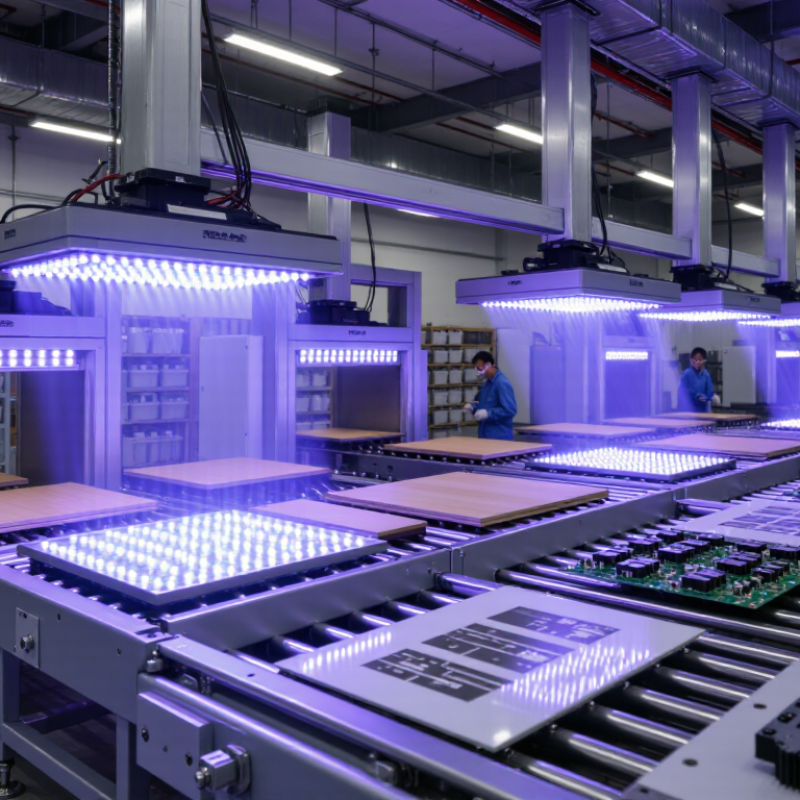
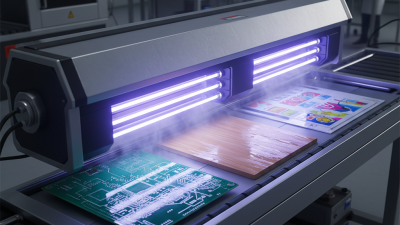
China has become a leading source of UV drying light suppliers because its manufacturing network is unusually complete. LED chips, optical lenses, aluminum housings, cooling fans, control boards, and packaging can often be sourced within one industrial region. This shortens development cycles and improves access to replacement parts. For printing, coating, electronics, and adhesive applications, suppliers can adjust wavelength, irradiance, curing width, and conveyor speed. The details matter.

Experienced suppliers usually provide irradiance maps, thermal test records, and electrical safety documentation. They may also offer sample testing with a customer’s actual material, such as ink on film or coating on metal. This practical step can reveal uneven curing, surface overheating, or insufficient exposure time before installation. A reliable technical team explains measurement methods clearly. It should not hide behind attractive specifications. Some suppliers still report peak intensity without describing test distance, which can confuse buyers.

China’s advantage is not simply low pricing. Large production volumes support faster tooling, flexible customization, and competitive engineering costs. Export-oriented factories also understand container packing, spare-part planning, and installation support. Still, buyers should examine factory audits, calibration procedures, warranty terms, and response times. A low quotation may conceal weaker cooling systems or shorter LED life. Not always. Careful comparison remains necessary, especially when a supplier promises unusually high output without independent verification.

China is a leading source of UV drying light suppliers because its large electronics, printing, coating, adhesive, and manufacturing ecosystems support broad production capabilities and flexible customization. The chart shows commonly used UV LED curing wavelength options and their typical industrial applications.

How Should Top Chinese UV Drying Light Suppliers Be Evaluated?

What Are the Top UV Drying Light Suppliers in China?

How Should Top Chinese UV Drying Light Suppliers Be Evaluated?

Evaluating Chinese UV drying light suppliers requires more than comparing prices. Start with measured performance. Check irradiance, wavelength stability, curing distance, cooling design, and operating life. A reliable supplier should provide test data from calibrated instruments. Ask for uniformity maps, not only peak intensity figures. This detail matters in printing, electronics, coatings, and adhesive production.

Market reports support this careful approach. The International Energy Agency reports that LED technology can reduce energy consumption substantially compared with conventional lighting in suitable applications. Meanwhile, MarketsandMarkets identifies rising demand for UV LED systems in industrial curing. However, market growth does not prove supplier quality. A supplier should demonstrate repeatable results on your actual materials. Request sample curing tests, thermal records, and maintenance data. Inspect the production line if possible. It may reveal more than a polished catalog.

Tips: Compare three suppliers using the same test conditions. Verify wavelength with a spectrometer. Check whether warranty terms cover output decline, not only total failure. Ask for traceable certificates and documented quality procedures. Also review response times for spare parts and technical support. These practical details often determine production stability. One weakness remains easy to miss: some suppliers report laboratory results that do not match factory conditions. Treat every figure as a starting point, not a guarantee.

What Are the Top UV Drying Light Suppliers in China? — How Should Top Chinese UV Drying Light Suppliers Be Evaluated?
Supplier evaluation framework based on verifiable technical, manufacturing, safety, service, and commercial criteria. The benchmarks below are general industry reference points and should be confirmed for the specific UV drying system and application.
Evaluation Dimension Weight What Should Be Evaluated Verifiable Benchmark or Industry Reference Recommended Evidence Scoring Guide
UV Wavelength Suitability 15% Whether the emitted wavelength matches the photoinitiator, coating, ink, adhesive, or resin being cured. Common UV LED curing bands include approximately 365 nm, 385 nm, 395 nm, and 405 nm. The correct band must be confirmed through the material supplier or curing trial. Spectral distribution report, LED wavelength tolerance, material compatibility data, and sample-cure results. 1–5
Irradiance and Dose Control 15% Peak irradiance, delivered UV dose, uniformity across the curing area, and repeatability during production. Irradiance is normally specified in mW/cm² and dose in mJ/cm². Required values vary by material, coating thickness, line speed, and working distance. Calibrated radiometer readings, uniformity maps, dose-versus-speed testing, and test conditions. 1–5
Thermal Management 12% Heat dissipation, cooling stability, protection of substrates, and operating performance under continuous duty. LED UV systems generally require effective heat sinking and may use air or liquid cooling. Operating temperature and thermal protection should be documented. Thermal test records, cooling-system specifications, over-temperature protection details, and continuous-operation test results. 1–5
Optical and Mechanical Design 10% Working distance, optical window, light distribution, mounting flexibility, protection from contamination, and ease of integration. A suitable design should maintain stable output at the specified working distance and provide adequate protection for the production environment. Mechanical drawings, optical layout, protection rating information where applicable, and integration samples. 1–5
Electrical and Photobiological Safety 12% Electrical protection, UV exposure controls, interlocks, shielding, emergency stop functions, and safe maintenance procedures. Photobiological safety assessment should consider IEC 62471. Electrical design should also be reviewed against applicable low-voltage, machinery, and regional compliance requirements. IEC 62471 assessment where applicable, electrical test reports, risk assessment, guarding design, and user safety instructions. 1–5
Manufacturing Quality System 10% Process control, incoming inspection, traceability, calibration, final testing, and corrective-action procedures. An ISO 9001-certified quality management system is a useful reference, but certification alone does not replace product-level testing and audit verification. Current certificate, audit records, quality-control plan, calibration records, and batch test reports. 1–5
Reliability and Service Life 10% LED degradation, controller stability, cooling-system reliability, operating hours, and failure-rate management. UV LED service-life claims commonly depend on junction temperature, drive current, cooling, and acceptable output depreciation. Service-life figures must state test conditions and remaining-output criteria. Aging-test data, output-maintenance curves, failure analysis, spare-parts policy, and warranty terms. 1–5
Customization and Integration 8% Ability to adapt dimensions, wavelength, intensity control, communication interfaces, mounting, sensors, and conveyor or robot integration. A qualified supplier should provide controlled engineering changes, interface documentation, and a repeatable process for custom configurations. Previous integration examples without confidential customer information, interface manuals, prototype records, and change-control documents. 1–5
Testing and Technical Support 5% Pre-sales process support, curing validation, installation guidance, troubleshooting, training, and response time. Support quality should be measured by documented test capability, defined response procedures, and the availability of technical personnel. Application test report, commissioning checklist, service-level commitment, training materials, and support escalation process. 1–5
Commercial Transparency and Total Cost 3% Quotation clarity, energy consumption, maintenance cost, spare parts, warranty coverage, delivery terms, and total cost of ownership. The lowest purchase price does not necessarily produce the lowest operating cost. Compare delivered dose, power consumption, downtime risk, warranty, and replacement costs. Itemized quotation, power-consumption data, warranty document, spare-parts list, delivery schedule, and ownership-cost estimate. 1–5
Recommended Decision Method Assign each supplier a score from 1 to 5 for every dimension, multiply each score by its weight, and compare the weighted totals. Require corrective action or additional testing for any supplier scoring below 3 in wavelength suitability, dose control, thermal management, or safety.
Important: UV curing performance depends on the material formulation, wavelength, irradiance, dose, working distance, exposure time, temperature, and substrate. Supplier claims should therefore be validated with application-specific trials and calibrated measurements before purchase.

Which Chinese Suppliers Stand Out in UV Drying Light Manufacturing?

Chinese suppliers that stand out in UV drying light manufacturing usually combine engineering depth with practical production control. Strong manufacturers offer precise wavelengths, such as 365, 385, 395, or 405 nanometers. They also provide measured irradiance, curing distance, and operating temperature data. These details matter more than attractive catalog images.

Factory experience is visible in small choices. Reliable suppliers use stable LED modules, protected optical windows, and effective heat dissipation. Their teams can adjust light intensity, exposure time, housing size, and cooling methods for different production lines.

A useful evaluation includes reviewing test reports, inspecting sample units, and checking calibration records. Ask how technicians control output after long operating hours.

Documentation matters.

Suppliers with mature quality systems can provide batch traceability, inspection procedures, and clear warranty terms. They should explain electrical safety, maintenance needs, and expected service life without making exaggerated claims. In my experience, a sample may perform well during a short trial but weaken under continuous factory use. That is why extended testing remains necessary. No supplier is perfect, and price alone can hide cooling or calibration weaknesses. Buyers should compare verified performance, response speed, customization ability, and after-sales support before selecting a Chinese manufacturing partner.

How Can Buyers Choose the Right UV Drying Light Supplier?

Choosing a UV drying light supplier requires more than comparing catalog prices. Start with your process: coating type, substrate, line speed, working distance, and target cure dose. A supplier should explain wavelength selection, irradiance stability, and heat exposure clearly. Ask for measured data, not only “high power” claims. Request a sample test using your actual ink, adhesive, or coating. Small details matter. A dark substrate may absorb heat differently from glass.

Assess engineering depth through practical questions. Can the supplier provide irradiance maps, calibration records, cooling specifications, and electrical drawings? Check whether the light source maintains consistent output after extended operation. Ask how they manage LED binning, lens aging, replacement parts, and safety interlocks. Reliable suppliers usually document inspection steps and product traceability. A factory audit may reveal more than a polished website. Still, one audit is not enough.

Review delivery history, technical response time, warranty terms, and installation support. Confirm that documents match your market’s safety and electrical requirements. Avoid choosing solely on the lowest quotation; unstable output can create tacky surfaces, rejected batches, and costly downtime. A supplier may pass a sample test yet struggle with mass production. Include a pilot run and acceptance criteria in writing. I would also reassess the supplier after three months. Early performance can hide maintenance weaknesses.