Leave Your Message

How to Choose a High Power UV Lamp?

Choosing a high-power UV lamp is not simply a matter of buying the unit with the largest wattage. A Uv Lamp High Power setup can deliver useful output, but performance depends on wavelength, optical design, distance, and the target material. Start with the task: curing, fluorescence inspection, or another defined process. Different applications need different UV bands. A bigger number on a product page can look convincing. It may not answer the real question.

Compare spectral range and measured irradiance at working distance, not electrical input alone. Ask whether the supplier provides test conditions, beam coverage, lamp life, warm-up time, and replacement-part details. Check intended duty cycle and cooling needs; a compact housing may run hot during long sessions. For a bench setup, note the actual distance and surface area. Small details matter. If data is missing, treat that as a reason to pause, not proof of poor quality.

Safety belongs in selection, not as an afterthought. UV exposure can harm eyes and skin, and risk varies by wavelength and use. Choose suitable shielding, interlocks where appropriate, and protective equipment specified for the device. Keep others outside the exposure zone, and follow manufacturer instructions. It is easy to let wattage dominate decisions, though it is only one part of the picture. A careful choice balances output, consistency, serviceability, and safe operation. The best lamp is the one that meets a measured need reliably, not the one that sounds strongest.
How to Choose a High Power UV Lamp?

Understanding High-Power UV Lamps and Their Applications

High-power UV lamps deliver intense ultraviolet output for processes that need controlled exposure. Common applications include curing inks, coatings, and adhesives, along with specialized inspection and research tasks. The right lamp depends on the material and process, not wattage alone. UVA is often used for curing, while UVB and UVC have different applications. Check the required wavelength against the process specifications; “UV” is not one interchangeable band. A powerful lamp can still perform poorly if its spectrum misses the target.

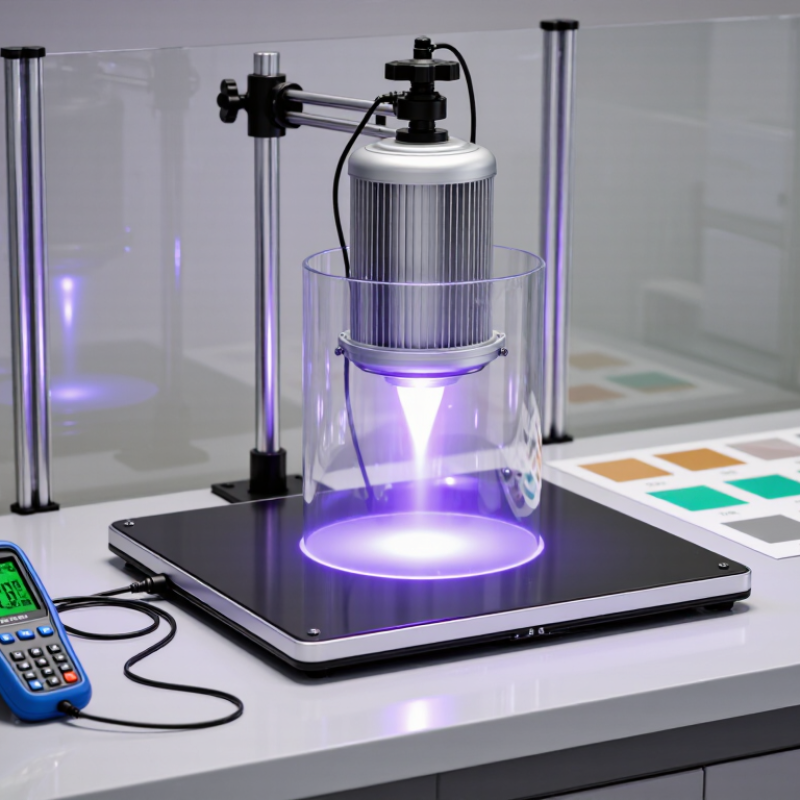
Selection starts with irradiance at the work surface and the required exposure dose. Distance, angle, lamp aging, airflow, and surface shape can all affect results. A raised fixture, for example, may leave a shadow beneath a thick component. Review the lamp’s spectral and thermal specifications, then verify output with a suitable, calibrated radiometer. I would not rely on a single reading. Measure across the working area. Strong UV can injure eyes and skin, so use suitable shielding, interlocks, and protective equipment. Heat can also damage sensitive plastics.

Tips: Match wavelength to the target. Measure at operating distance. Keep surfaces clean. Watch temperature. Record settings, then test a representative sample before routine use.
Identifying the UV Wavelength and Output Requirements

A high-power UV lamp should be selected by wavelength and useful output, not wattage alone. The wavelength determines which materials or processes respond, while the delivered irradiance shows how much energy reaches the target. A lamp’s electrical rating cannot tell you that by itself. Check its spectral range and output data, then confirm whether those values apply at your working distance.

Match the wavelength to the task. For example, some curing systems use UVA around 365 nanometers, while certain disinfection equipment uses UV-C near 254 nanometers. These are not interchangeable. Verify the required wavelength with equipment specifications or a qualified specialist. Measure irradiance at the surface, using a meter suited to that wavelength. Distance matters. So do angles, reflectors, and shadows. A sensor placed beside the target may give a misleading reading.

Consider exposure time alongside intensity: the delivered dose depends on both. If a process needs a set dose, a lower reading may require longer exposure, but only within the material’s limits. Heat, lamp aging, and uneven illumination can change results over time. The first estimate is rarely the final one.

Recheck measurements under actual operating conditions, and document the distance, reading, and exposure time. Small setup differences can matter. UV can injure eyes and skin, so use appropriate shielding and follow the equipment’s safety instructions.

Comparing Lamp Types, Power Ratings, and Operating Conditions

Choosing a high-power UV lamp starts with its spectrum, not its wattage. Low-pressure mercury lamps emit mainly at 254 nm, while UV-C LEDs can be designed for different peak wavelengths. The U.S. Department of Energy’s Germicidal Ultraviolet (GUV) FAQ explains that wavelength affects germicidal performance. Match the lamp to the target material or process. Watts can mislead.

Compare electrical input with measured UV output, then consider how much radiation reaches the treatment area. The U.S. EPA’s 2006 UV Disinfection Guidance Manual evaluates systems using validated dose, expressed in mJ/cm², rather than lamp wattage alone. Dose depends on intensity and exposure time. A lamp rated highly on paper may deliver less useful energy at the surface if it sits too far away or the beam is obstructed.

Operating conditions matter. Dust on a quartz sleeve, aging lamps, poor airflow, or a cold start can change output. Check the manufacturer’s test conditions and look for irradiance data at a stated distance. Record readings after warm-up, not just at switch-on. For a real installation, measure the target plane with a suitable UV radiometer and repeat checks as the lamp ages. It is easy to over-focus on peak power; I would also verify the spectrum and maintenance schedule. That judgment can be imperfect, especially when surfaces are uneven.

Assessing Safety Features, Compatibility, and Maintenance Needs

A high-power UV lamp should be chosen around its safeguards, not its wattage alone. Look for a shielded housing, a reliable timer, and an interlock that stops operation when the cover opens. Warning indicators should be easy to see from the work area. UV exposure can injure eyes and skin, even when the light seems faint. Keep the lamp enclosed and follow its operating instructions. Small details matter.

Check that the lamp’s wavelength and output suit the intended equipment or process. Confirm the required distance and exposure area against the manufacturer’s specifications; a lamp that fits physically may still deliver uneven coverage. Consider nearby materials, too. Some plastics and seals can degrade under UV exposure. I once assumed a clear cover would be suitable, but its UV transmission was not obvious. Verify compatibility rather than guessing.

Tips: Inspect cables, shields, and interlocks before use. Clean the lamp only as directed, with power disconnected. Output can decline as a lamp ages, even when it still glows. Track operating hours and replace components according to the manufacturer’s guidance. If readings or results seem inconsistent, pause and reassess the setup instead of simply increasing exposure.

How to Choose a High-Power UV Lamp

Match wavelength to the task: 254 nm UV-C is commonly used for germicidal applications, 365 nm UV-A for curing and inspection, and 222 nm far-UVC sources are used in specialized applications. These are representative wavelengths, not measures of lamp power or effectiveness. Check irradiance and equipment compatibility at the working distance, use shielding and interlocks to prevent exposure, and follow the manufacturer’s cleaning and replacement schedule.

Selecting a Lamp Based on Performance, Cost, and Service Life

Choosing a high-power UV lamp starts with the task, not the wattage printed on its label. Check the required wavelength range and the UV intensity at the actual working distance. A lamp may draw substantial power yet deliver uneven exposure across a wide surface. Ask for measured irradiance data, and compare results under similar conditions. Keep the geometry in mind.

Performance also depends on heat, airflow, and the power supply. In a workshop, a lamp mounted too close to a surface may create hot spots or uneven curing. A stable output matters more than a brief peak reading. If possible, test a sample using your normal distance and cycle time. Small differences show up fast.

Look beyond the purchase price. Include electricity use, compatible control gear, cooling, replacement parts, and downtime. Service-life claims often describe hours until output falls to a stated level, not the moment a lamp stops working. Confirm how that level is measured. Track output periodically with a suitable meter; visual brightness is not a reliable indicator. A spreadsheet can make the choice seem clearer than it is, since real use varies. Ask about warranty terms and expected output decline, then weigh those details against the cost of changing lamps and interrupting work.

How to Choose a High Power UV Lamp? - Selecting a Lamp Based on Performance, Cost, and Service Life

UV Lamp Type Typical Spectral Output Typical Electrical Power Performance Considerations Typical Service Life Relative Upfront Cost Operating and Maintenance Considerations Best-Fit Applications
Medium-pressure mercury Broad UV output, with strong UV-C, UV-B, and UV-A lines and bands. Commonly about 1–30 kW per lamp, depending on design. High UV output from a compact arc; broad spectrum can support fast curing and photochemical processes. Requires suitable cooling and shielding. Often about 2,000–8,000 operating hours; replacement timing depends on the permitted loss of UV output. Medium Usually requires a ballast and warm-up period. Lamp output and electrical demand can be substantial; monitor irradiance and replace lamps according to process requirements. Industrial UV curing, printing, coatings, and other processes needing high-intensity broadband UV.
Low-pressure mercury, including amalgam Predominantly 254 nm UV-C; some designs also produce 185 nm output. From tens to hundreds of watts per lamp; higher-output systems may combine multiple lamps. Efficient production of germicidal UV-C at a narrow wavelength. Amalgam designs can maintain useful output across a wider operating-temperature range than conventional low-pressure lamps. Often about 8,000–16,000 hours, subject to switching frequency, temperature, and output requirements. Low to medium Needs a ballast and typically benefits from controlled operating conditions. Sleeve fouling and water or air quality can reduce delivered UV dose. Water and air disinfection systems designed around 254 nm UV-C.
UV-C LED array Available at selected UV-C wavelengths, commonly around 265–280 nm. Often tens to hundreds of watts per array; large systems may use multiple modules. Instant on/off, no mercury, and wavelength-specific output. UV-C electrical efficiency is generally lower than visible-light LED efficiency, and high-power designs require careful thermal management. Often specified at roughly 10,000–30,000 hours to a stated output-maintenance threshold; actual life depends strongly on junction temperature and drive conditions. High Allows frequent switching and compact integration. Heat sinking, airflow, optical design, and periodic UV-output checks are important for maintaining dose. Compact disinfection equipment, point-of-use systems, and applications that benefit from instant switching or mercury-free operation.

Selection note: Compare measured UV irradiance or delivered UV dose at the target—not electrical wattage alone. Service-life figures are typical ranges rather than guarantees; check the supplier’s rated-life definition, operating conditions, and required end-of-life output. UV-C can harm eyes and skin, so use appropriate shielding and safety interlocks.