Leave Your Message

10 UV LED Light Lamp Buying Tips for Global Buyers

Choosing the right Uv Led Light Lamp is more complex than comparing price tags or attractive product photos. Global buyers must evaluate wavelength accuracy, irradiance, curing distance, heat control, and operating life. A lamp that looks powerful may perform unevenly across a wide surface. Small differences can affect curing quality, production speed, and customer satisfaction.

This guide presents ten practical buying tips for international purchasing decisions. It considers application requirements, LED chip quality, cooling design, power compatibility, control functions, and maintenance access. Buyers should request test data, user manuals, warranty terms, and product samples before placing large orders. Clear documentation matters when equipment crosses borders. Supplier experience also deserves attention. Factory audits, quality certifications, traceable components, and responsive technical support can reveal more than a polished website.

Details matter.

I have seen buyers focus on wattage while overlooking irradiance at the actual working distance. That mistake can create weak results, excessive exposure time, or unexpected heat. A lower-priced lamp may reduce the initial budget, but replacement costs can change the final calculation. No checklist is perfect. Product performance can still vary between batches, especially when specifications remain vague. Careful buyers should compare measured results, not only advertised claims. They should also confirm plug types, voltage ranges, packaging strength, customs documents, and after-sales service before payment. These steps support safer, more reliable sourcing and help match the Uv Led Light Lamp with real workplace needs.
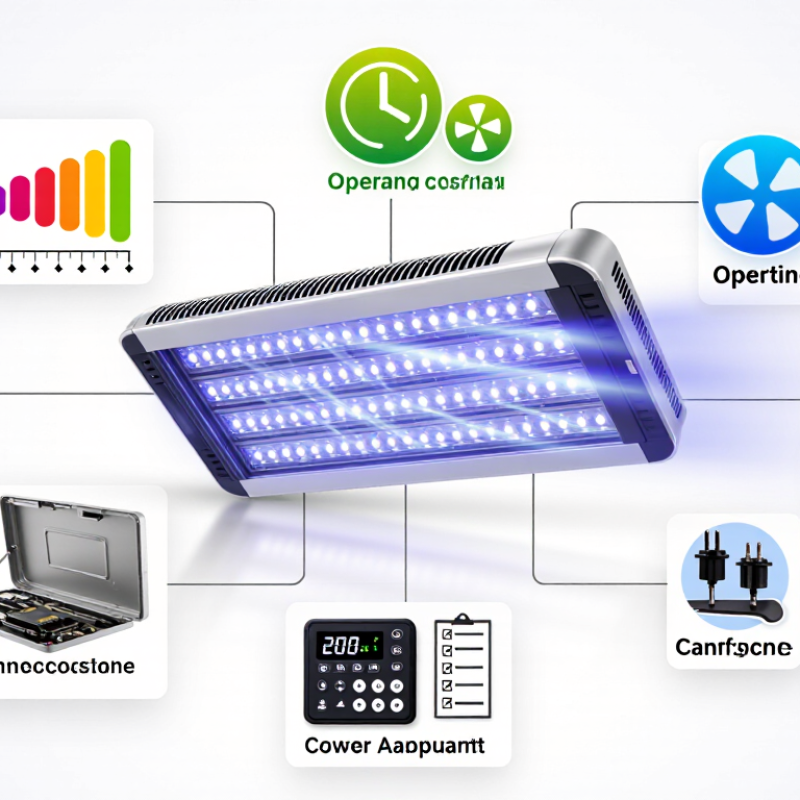
10 UV LED Light Lamp Buying Tips for Global Buyers

Define UV LED Wavelengths: UVA 315–400 nm, UVB 280–315 nm, UVC 200–280 nm

When comparing UV LED lamps, wavelength is the specification I check before brightness or housing design. UVA covers 315–400 nm and supports fluorescence inspection and selected curing processes. UVB spans 280–315 nm. It requires tighter control. UVC covers 200–280 nm and serves controlled disinfection systems. A number alone is not enough.

In practical purchasing tests, I request a measured spectral graph, not only a printed peak wavelength. A 365 nm lamp may also produce unwanted visible violet light. That can distort inspection results. Check output at the working distance. Irradiance changes with distance, lens angle, and heat. For UVB and UVC, shielding, interlocks, warning labels, and protective procedures deserve equal attention. Never judge safety from a small package.

Global buyers should compare wavelength tolerance, optical window, cooling method, lifetime data, and test reports. Ask whether measurements follow a recognized laboratory method. Calibration dates matter. A low-cost lamp can become expensive when output drifts or misses the required band. I have seen precise-looking specifications without tolerance values. That gap is easy to overlook. Recheck the application with a qualified technical professional when exposure or curing performance affects people, materials, or process quality.
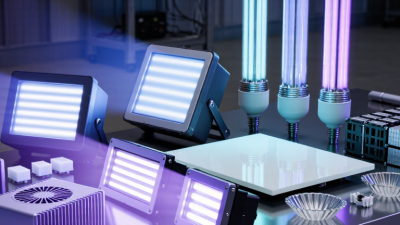
Compare Irradiance, Dose, and Runtime Using mW/cm² and mJ/cm²

When comparing UV LED lamps, begin with irradiance, measured in mW/cm². It describes power reaching each square centimetre, not total lamp wattage. A 50 mW/cm² reading delivers 50 mJ/cm² in one second. At 20 mW/cm², the same 500 mJ/cm² dose requires 25 seconds. Simple arithmetic helps.

Published guidance from the International Ultraviolet Association and CIE technical documents stresses measurement at the working surface. Distance, beam angle, temperature, and reflector design can change readings sharply. Ask for a calibrated radiometer report, including wavelength and measurement uncertainty. “High output” is not enough. A 365 nm device and a 395 nm device may produce different results, even at identical irradiance.

The International Commission on Non-Ionizing Radiation Protection reports that UV exposure limits depend on wavelength and exposure duration. Buyers should therefore compare dose in mJ/cm², rather than runtime alone. Check whether the stated dose is measured at the center, edge, or average area. LED aging also matters; a 2023 U.S. Department of Energy solid-state lighting report highlights thermal management as a major factor in LED performance and lifetime. I would leave safety margin. Real installations are rarely as uniform as laboratory charts.

Verify Optical Safety Under IEC 62471 Photobiological Risk Groups

When buying a UV LED lamp internationally, treat IEC 62471 verification as essential, not decorative paperwork. The standard classifies optical radiation into Exempt, Risk Group 1, Risk Group 2, and Risk Group 3. Ask for the complete photobiological safety report, not only a printed risk-group label.

The report should show spectral measurements, weighted irradiance, radiance, test distance, exposure duration, and measurement uncertainty. A 365 nm specification does not prove safety. Nearby wavelengths, optical focusing, and reflective surfaces can change the exposure significantly.

ICNIRP’s ultraviolet guidelines limit effective actinic exposure to 30 J/m² over an eight-hour period, covering wavelengths from 180 to 400 nm. That figure is a useful screening reference, not a substitute for testing the actual lamp.

Check the lamp at its real working distance. For example, a small curing unit used 10 centimeters from skin needs stricter evaluation than a distant inspection light. Look for shielding, a stable enclosure, warning labels, and an interlock that stops emission when opened.

The U.S. Department of Energy’s solid-state lighting assessments repeatedly emphasize optical performance, thermal control, and reliable measurement methods. UV products deserve the same discipline.

I would not trust a supplier’s “eye-safe” claim without independent laboratory evidence. A certificate can also be incomplete. Recheck its test date, model number, spectrum, and intended use before purchasing.

Assess LED Lifespan, Thermal Control, and the 50,000-Hour Rating

When buying a UV LED lamp, treat the 50,000-hour rating as a reference, not a guarantee. This figure usually describes expected diode life under controlled conditions. Real performance depends on daily operating hours, ambient temperature, current stability, and ventilation. A lamp running beside a hot production line may age much faster.

Check how the seller measures lifespan. Reliable suppliers should provide testing conditions, expected light output after aging, and thermal data. Ask whether the rating means complete failure or reduced UV intensity. These are different results. Output matters more.

Look closely at thermal control. A solid aluminum heat sink, clear airflow path, and stable cooling system can protect the LEDs and power circuit. During inspection, run the lamp continuously for several hours. Feel the housing carefully, or use an infrared thermometer. Excessive heat is a warning sign. Very hot surfaces.

I would also compare the warranty with the claimed lifespan. A long rating with vague warranty terms deserves caution. Some buyers focus only on wattage and price, but that approach can be misleading. Higher electrical power does not always produce stronger or more uniform UV output. Request an irradiance map, maintenance guidance, and replacement-part information. My own evaluation would include dust buildup, fan noise, and performance after repeated start-stop cycles. The 50,000-hour figure is useful, but it needs context.

Check Certifications, IP Protection, Beam Uniformity, and Global Voltage Support

10 UV LED Light Lamp Buying Tips for Global Buyers

Check certification before brightness claims. IEC 62471 evaluates photobiological safety, including ultraviolet exposure risk. Request test reports with wavelength, irradiance, and measurement distance. A lamp advertised as 365 nm may actually vary several nanometers. That difference can affect curing and inspection results. Verify electrical safety against applicable IEC requirements, not only a supplier’s declaration. Experience matters here. Paperwork often looks stronger than the testing behind it.

Tip: Confirm IP protection. IEC 60529 defines IP65 as dust-tight and protected against water jets. It does not guarantee resistance to solvents, salt, or continuous immersion. Ask for beam maps, not just lumen figures. Uneven UV intensity creates dark curing zones and inspection errors. The U.S. Department of Energy’s 2023 Solid-State Lighting R&D report highlights thermal control and optical management as continuing LED challenges. Keep the lamp cool; output can drift during long shifts. This is easy to underestimate.

Tip: Test global voltage support at the installation site. Look for a stated input range, such as 100–240 V AC, plus frequency compatibility from 50 to 60 Hz. Check plug types, grounding, surge protection, and replacement-driver availability. A universal label is not enough. Measure beam uniformity across the actual working distance. Ten buying checks should include certification, IP rating, spectrum, irradiance, uniformity, heat, voltage, controls, service access, and documented testing. Recheck two of them. Suppliers can make mistakes.