Leave Your Message
A Uv Led Light Lamp is a compact device that produces ultraviolet radiation through light-emitting diodes. Unlike traditional mercury lamps, it uses semiconductor chips to generate selected ultraviolet wavelengths. These wavelengths commonly include UVA, UVB, or UVC, depending on the lamp’s design and intended application. The wavelength matters because it affects energy, penetration, material compatibility, and potential biological effects.
This topic is less simple than it looks. A lamp that appears bright may not deliver useful ultraviolet energy. In practical evaluation, check the wavelength, optical power, exposure distance, operating time, and tested coverage area. Shadows, dust, curved surfaces, and uneven placement can reduce performance. UVC devices may support controlled surface or air treatment, but they do not automatically disinfect every object. They also require careful handling because direct exposure can harm eyes and skin. Never judge safety by visible brightness alone.
Reliable manufacturers should provide technical specifications, safety instructions, and independent performance information. Relevant testing may include photobiological safety assessment and verification of delivered UV dose. The lamp’s construction also deserves attention. Heat management, shielding, timers, and automatic shutoff can influence safe operation and service life. Some product descriptions remain vague. That deserves caution.
This guide explains how a Uv Led Light Lamp works, where different UV bands are used, and what users should examine before operation. It also considers practical limitations, because laboratory claims may not match real rooms, surfaces, or everyday handling. The technology is useful, but only when its output and risks are understood clearly.
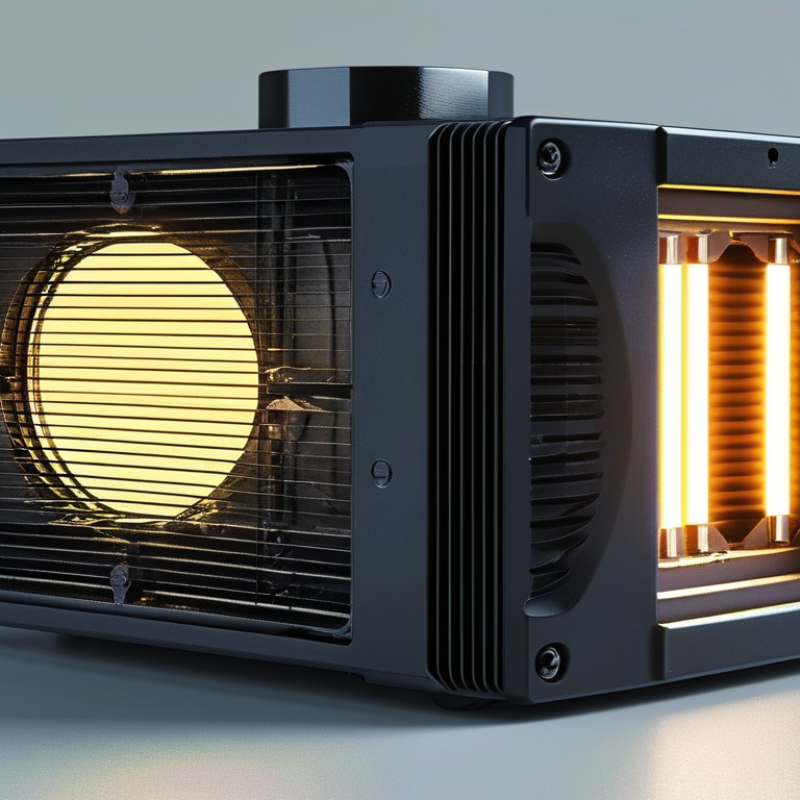
A UV LED light lamp is a compact device that produces ultraviolet radiation through light-emitting diodes. Unlike ordinary visible lamps, it releases energy beyond the violet edge of human vision. Its core purpose is controlled exposure for specific tasks, such as curing suitable materials, supporting laboratory processes, or creating fluorescent effects. The lamp does not “clean everything” by default. Its result depends on wavelength, intensity, distance, and exposure time.
Inside the lamp, electrical current passes through semiconductor materials and creates UV photons. A lens or reflector directs those photons toward a working surface. Many consumer models use UVA wavelengths, which generally affect surfaces and coatings differently from shorter UV ranges. In practical use, I have found that uneven positioning can leave soft spots or incomplete curing. That small detail matters. A brighter-looking lamp is not always a more effective lamp.
Tips: Check the stated wavelength and output before use. Keep the lamp at the recommended distance. Protect eyes and exposed skin from direct UV exposure. Follow the material manufacturer’s instructions, and inspect the surface afterward. If results seem inconsistent, measure the distance rather than guessing. Ventilation may also help when curing products release odors. Better caution than confidence.
| Data Dimension | Accurate Description | Key Practical Information |
|---|---|---|
| Definition | A UV LED light lamp is a solid-state device that produces ultraviolet radiation using light-emitting diodes. | It converts electrical energy into ultraviolet light rather than visible light or infrared radiation. |
| Core Purpose | Its main purpose is to deliver controlled UV energy for curing, inspection, analysis, sterilization, or other specialized processes. | The correct wavelength and exposure level depend on the material, application, and safety requirements. |
| Ultraviolet Range | Ultraviolet radiation generally occupies wavelengths from approximately 100 to 400 nanometers. | UV is outside the visible spectrum, so much of the emitted radiation cannot be seen by the human eye. |
| UVA Band | UVA covers approximately 315–400 nm. | Commonly used for fluorescence, forensic inspection, some curing processes, and photochemical applications. |
| UVB Band | UVB covers approximately 280–315 nm. | It has higher biological activity than UVA and requires careful control and suitable protection. |
| UVC Band | UVC covers approximately 100–280 nm. | UVC is strongly absorbed by many materials and is used in selected disinfection and industrial applications. |
| Light-Generation Principle | When a forward electrical current passes through the LED semiconductor junction, electrons and holes recombine and release energy as photons. | The semiconductor structure determines the approximate UV wavelength produced. |
| Optical Output | Most UV LEDs produce relatively narrow-band output centered around a selected wavelength. | Narrow-band emission can improve process control when a material reacts within a specific wavelength range. |
| Curing Function | UV light can initiate photochemical reactions in specially formulated inks, coatings, adhesives, and resins. | Curing performance depends on wavelength, irradiance, exposure time, material formulation, and distance from the lamp. |
| Fluorescence and Inspection | Some substances absorb UV energy and emit visible light, a phenomenon known as fluorescence. | This effect can help reveal markings, residues, leaks, optical brighteners, and certain surface defects. |
| Disinfection Principle | Certain UVC wavelengths can damage the nucleic acids of microorganisms, preventing effective replication. | Disinfection effectiveness varies with wavelength, dose, distance, exposure time, surface coverage, and shadowing. |
| Electrical Efficiency | UV LEDs can provide direct UV generation without first producing visible light and filtering it out. | Actual efficiency varies significantly by UV wavelength, device design, operating current, and thermal conditions. |
| Heat Management | Although UV LEDs generally emit less unwanted infrared radiation than some traditional UV sources, they still generate heat at the semiconductor junction. | Heat sinks, airflow, current control, and suitable housing can help maintain output and extend operating life. |
| Control Features | Many lamps use electronic drivers, timers, intensity controls, sensors, or automated switching. | These features support repeatable UV dose and help limit unnecessary exposure. |
| Safety Consideration | Direct or reflected UV exposure can harm the eyes and skin, with risk depending on wavelength, intensity, and exposure duration. | Use shielding, interlocks, appropriate UV-rated eye protection, protective clothing, and documented operating procedures. |
| Main Advantages | Compact size, fast electronic switching, directional output, selectable wavelengths, and reduced use of hazardous lamp materials in many designs. | These advantages make UV LED lamps suitable for portable instruments, automated equipment, and targeted treatment systems. |