Top UV LED Curing Lamp Manufacturers for Global Buyers?
Choosing a reliable Uv Led Curing Lamp manufacturer requires more than comparing prices or browsing polished product pages. Global buyers need evidence of stable performance, accurate specifications, and dependable after-sales support. A lamp may look impressive in a catalog, yet fail under continuous production conditions. Heat management, irradiance consistency, wavelength accuracy, and curing speed deserve careful attention.
This guide explores leading UV LED curing lamp manufacturers serving international markets. It considers practical experience, engineering capability, manufacturing quality, and documented customer service. Important details include LED chip origin, cooling design, optical uniformity, working distance, and expected service life. Certifications can support trust, but they should not replace independent technical verification. A credible supplier should provide test data, installation guidance, safety information, and responsive communication across time zones.
Real production environments are rarely perfect. Dust, voltage changes, operator habits, and irregular maintenance can affect curing results. No ranking is completely objective. Some manufacturers publish limited data, while others present impressive figures without enough testing conditions. Buyers should ask difficult questions before signing a purchase agreement. Can the supplier provide a sample evaluation? Are replacement parts available? Does the warranty cover actual industrial use? These questions often reveal more than marketing language.
The following overview is designed for distributors, equipment integrators, and manufacturers seeking dependable UV curing solutions. It compares suppliers through a practical, evidence-based lens. Readers should still verify specifications for their own substrates, production speeds, and regional requirements. The best choice is not always the cheapest or most famous. It is the one that performs consistently when the factory floor becomes demanding.
UV LED Curing Lamps: Technology, Applications, and Industry Scope
UV LED curing lamps use semiconductor diodes to emit targeted ultraviolet wavelengths, commonly 365, 385, 395, or 405 nanometers. Unlike mercury systems, they produce little radiant heat and start instantly. This changes production planning. Operators can cure adhesives near heat-sensitive plastics, printed electronics, coatings, and dental materials with less thermal stress. In a factory trial, dose matters more than lamp brightness. Measure irradiance at the work surface, not at the window.
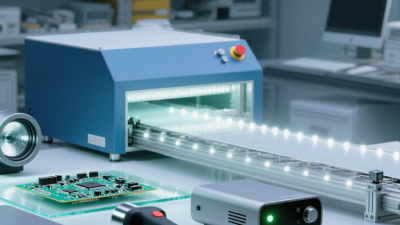
Applications range from narrow adhesive bonding stations to conveyor-based ink curing and three-dimensional coating lines. A reliable system needs stable output, controlled distance, cooling, shielding, and documented testing. Airflow and lens cleanliness are easy to overlook. They quietly reduce performance. Buyers comparing global manufacturers should request wavelength data, uniformity maps, lifetime testing, electrical certifications, and service procedures. Ask how output is verified after months, not only on delivery day. Some suppliers provide impressive peak figures, yet weak edge coverage can create uncured areas. That detail deserves scrutiny.
The industry scope is expanding through flexible electronics, optical assembly, fiber production, packaging, and specialized industrial printing. Automated systems can connect lamp controls with sensors and production software, improving traceability. Still, UV safety training, guarding, and exposure controls remain essential. LED does not mean risk-free. Rushed installations may treat thermal management as an accessory; that can become a costly assumption. Better procurement combines laboratory data with a small production trial, because real surfaces rarely behave like test coupons.
UV LED Curing Lamps: Technology, Applications, and Industry Scope
UV LED curing systems primarily operate in the UVA and near-UV range. Common peak wavelengths include 365, 385, 395, and 405 nm, selected according to photoinitiator response, material chemistry, curing depth, and production requirements.
Typical application scope includes industrial inks, adhesives, coatings, electronics assembly, optical bonding, 3D printing, dental materials, and laboratory processes. The chart shows representative LED peak wavelengths rather than manufacturer performance, sales, or market-share data.
Leading UV LED Curing Lamp Manufacturers by Market Strength
Top UV LED Curing Lamp Manufacturers for Global Buyers
Market strength is more than factory size. Leading UV LED curing lamp manufacturers usually combine stable production, tested optical design, and dependable after-sales support. Global buyers often examine shipment history, regional service coverage, and replacement-part availability before signing contracts.
A strong manufacturer can provide consistent irradiance across the curing area. This matters when a production line runs for many hours each day. Practical evaluations should include wavelength tolerance, cooling performance, curing speed, and lamp life. Ask for test data from independent laboratories, not only internal brochures. Sample trials can reveal uneven curing near edges, excessive heat, or difficult control software.
Certifications help, but they do not replace technical judgment. Check electrical safety documents, quality systems, export experience, and traceable inspection records. Reliable suppliers explain how they measure radiant intensity and how often calibration is required. They also offer installation guidance for different substrates, coatings, and conveyor speeds.
Market rankings can change quickly. Public sales figures are often incomplete, and regional demand can distort comparisons. A large supplier may still respond slowly to a small overseas buyer. That weakness matters. Smaller manufacturers may provide faster engineering support, but their production capacity may be less predictable. Buyers should compare documented performance, service response times, warranty terms, and total operating cost rather than relying on reputation alone.