The 2026 LED UV curing lamp market is moving from simple replacement toward application-specific engineering. MarketsandMarkets estimates that the global UV LED market could grow from approximately USD 1.1 billion in 2023 to USD 2.7 billion by 2028, with a compound annual growth rate near 19%. Grand View Research also reports strong expansion through 2030. These figures cover broader UV LED applications, not curing lamps alone. That distinction matters.
A modern Led Uv Curing Lamp may use 365, 385, 395, or 405 nanometer wavelengths. Each choice affects ink depth, adhesive response, heat transfer, and curing speed. A 395-nanometer unit may suit general industrial coatings, while 365 nanometers can improve surface response for selected photoinitiator systems. However, wavelength alone never guarantees complete curing. Dose, irradiance, working distance, cooling, and material formulation must be measured together.
“UV LED curing is a process, not a lamp,” explains Dr. Chris Miller, a recognized UV LED curing specialist. His observation remains practical in 2026. Buyers sometimes compare only wattage, which is an imperfect shortcut. A compact air-cooled lamp may perform well on narrow web lines, while a water-cooled system may remain steadier during continuous production. RadTech technical guidance repeatedly emphasizes process validation, photochemical compatibility, and measurable UV dose. This article examines the leading 2026 lamp types, including air-cooled, water-cooled, spot, flood, and high-intensity systems. Some market forecasts still conflict. Therefore, verified test data should guide purchasing more than impressive catalog numbers.
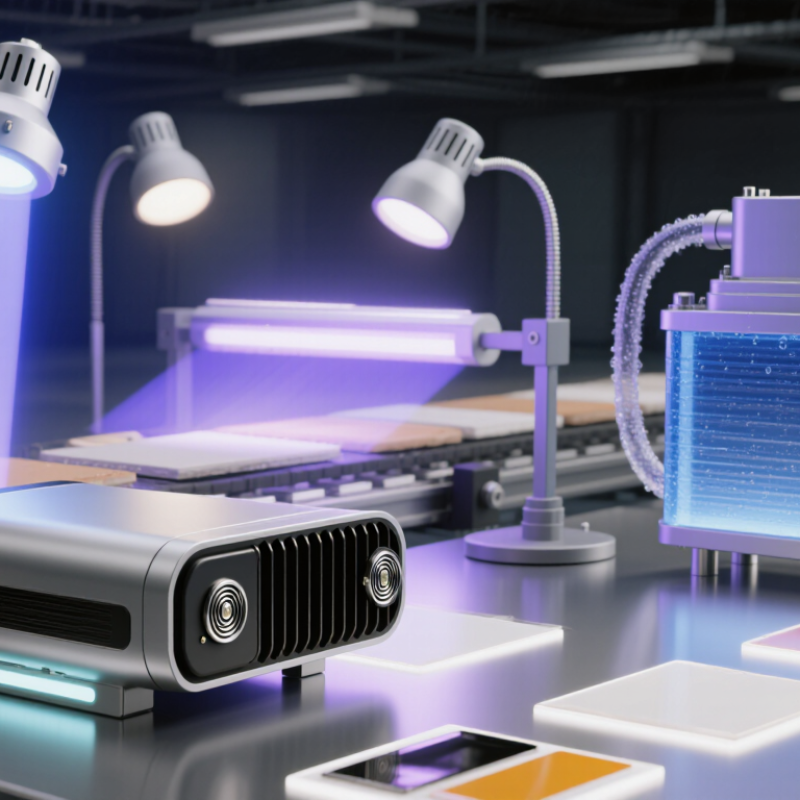
An LED UV curing lamp uses semiconductor diodes to produce ultraviolet light. The light activates photoinitiators inside ink, adhesive, resin, or coating. This reaction changes a liquid material into a solid film. No flame is involved.
In 2026, common LED UV lamp types will remain organized by wavelength and curing format. Lamps near 365 nanometers suit some specialized photoinitiators. Units around 385 and 395 nanometers support many industrial coatings and adhesives. A 405-nanometer lamp can work well with compatible formulations. Wavelength compatibility matters more than brightness alone. Spot lamps cure small areas with controlled exposure. Flood lamps cover wider surfaces. Conveyor systems provide steady curing for repeated production.
The process needs accurate control. A controller sets exposure time and electrical output. Working distance changes the energy reaching the surface. Technicians should measure irradiance with a calibrated radiometer, not trust visible brightness. The surface can feel hard while the deeper layer remains soft. That result is misleading. I have seen curing improve after cleaning the lens and reducing the lamp distance slightly. LED systems usually produce less unwanted heat than older UV sources, but heat still develops near dense arrays. A stronger setting is not always better. Overexposure may discolor sensitive materials or create unnecessary stress. The neat theory has limits. Formulation, thickness, pigment load, and lamp age all affect the final cure.
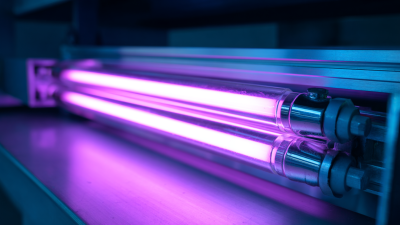
LED UV curing lamps use semiconductor chips to emit ultraviolet-A light, typically between 365 and 405 nanometers. The UV energy activates photoinitiators in inks, coatings, adhesives, and resins, causing rapid polymerization and curing.
The chart compares representative peak irradiance levels commonly specified for industrial LED UV curing systems by dominant wavelength. Actual output varies with optical design, cooling, working distance, and curing application.
LED UV curing in 2026 depends heavily on wavelength selection. Most systems use UVA bands between 365 and 405 nanometers. The correct wavelength must match the photoinitiator inside the resin, ink, adhesive, or coating. A lamp with high output is not automatically effective. Poor spectral matching can leave a surface tacky, even when the lamp feels powerful.
365 nm The 365 nm wavelength provides strong photoinitiator activation and suits many specialized coatings. However, it often offers less curing depth than longer UVA wavelengths.
385 nm The 385 nm type supports balanced surface curing and moderate penetration. It is common in electronic assemblies, industrial adhesives, and detailed printed layers.
395 nm The 395 nm wavelength generally provides deeper curing with widely used formulations. It can work well on thicker coatings, though surface oxygen inhibition may remain noticeable.
405 nm The 405 nm type is useful for selected resins and visible-light-sensitive formulations. Its performance depends strongly on the chemical design of the material.
Small differences matter. In production trials, technicians should measure irradiance and dose at the work surface. Distance, lens angle, temperature, and conveyor speed can change results. A 10-millimeter gap may produce a different cure than expected. That assumption is often wrong.
I have seen operators choose 395 nm only because it is widely available. This shortcut can waste material and increase rework. Material data should confirm the required wavelength range, exposure dose, and acceptable curing depth. Testing under real conditions remains essential, especially when pigments, fillers, or curved surfaces block UV energy.
In 2026, LED UV curing lamp designs are becoming more application-specific. The main types include spot lamps, linear arrays, flood systems, and conveyor-mounted modules. Spot lamps deliver concentrated energy through small optical heads. They suit adhesive dots, sensors, and narrow assembly areas. Linear arrays create an even curing band across labels, printed electronics, or coated surfaces. Flood systems cover wider parts, but edge intensity can fall quickly. That detail is easy to miss.
MarketsandMarkets’ 2024 UV LED market report projects a compound annual growth rate above 20% through 2028. The report links growth to lower energy use, longer operating life, and reduced heat transfer. In practical testing, however, lamp choice depends on irradiance, wavelength, working distance, and exposure time. A powerful lamp may still cure poorly when its optical window is dirty. Air-cooled designs fit compact workstations. Water-cooled modules usually support higher continuous output. Conveyor systems often combine several modules for better dose control. No single design wins every process.
Tips: Measure irradiance at the product surface, not only at the lamp window. Keep a dose log. Check uniformity across the full curing width. For heat-sensitive substrates, test the part temperature after repeated cycles. Also, question supplier figures when they omit measurement distance or calibration details. That omission can distort comparisons. RadTech technical guidance repeatedly emphasizes process validation, shielding, and routine verification. A useful 2026 design is not merely bright; it is stable, measurable, serviceable, and matched to the material.
A practical comparison of the main LED UV curing lamp designs and their typical technical characteristics
| LED UV Lamp Design | Typical Wavelengths | Typical Irradiance Range* | Curing Area or Format | Best-Suited Applications | Main Advantages | Key Limitations | Common Control Features |
|---|---|---|---|---|---|---|---|
| Spot Curing Lamp | 365, 385, 395, or 405 nm | Approximately 1–20 W/cm² at the curing point | Small focused spots; commonly supplied through one or more light guides | Electronic assembly, optical bonding, medical-device assembly, small adhesive joints, and precision dispensing | High precision, fast curing, low heat transfer, and easy access to small targets | Limited curing area; light-guide positioning and shadowing can affect consistency | Independent channel control, timed exposure, intensity adjustment, and recipe storage |
| Flood or Area Curing Lamp | 365, 385, 395, or 405 nm | Approximately 0.5–8 W/cm² across the usable area | Rectangular or square illumination fields, commonly from a few centimeters to larger modular areas | Displays, labels, printed electronics, adhesive films, molded parts, and batch processing | Uniform coverage, simple part placement, and suitable for multiple components at once | Lower peak intensity than some focused systems; uniformity can decline near the field edges | Exposure timer, power percentage control, cooling monitoring, and interlock protection |
| Linear or Line-Focused Lamp | Typically 365–405 nm, depending on the adhesive or coating | Approximately 2–15 W/cm² along the focal line | Long narrow curing line; length is commonly modular and can be configured for the product width | Web processing, narrow-strip coating, printed materials, adhesive bead curing, and automated assembly lines | Efficient continuous curing, high production speed, and good integration with motion systems | Requires controlled part movement or accurate alignment; line uniformity must be verified | Encoder synchronization, segmented zones, speed compensation, and closed-loop monitoring |
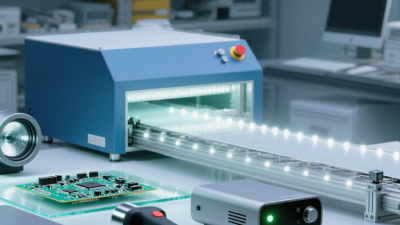
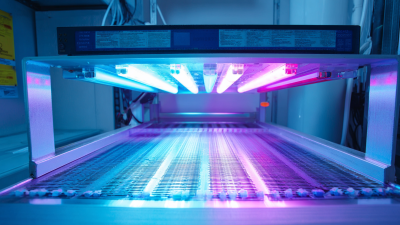
| Conveyor or Tunnel Lamp | 365, 385, 395, or 405 nm; multi-wavelength systems are also used | Approximately 1–10 W/cm² at the product surface | Wide fixed chamber with a defined working distance and conveyor path | High-volume assembly, packaging, coating, printing, and repeatable batch production | Consistent process timing, reduced operator handling, and easy production-line automation | Higher installation cost and footprint; shadowed surfaces may require multiple lamp directions | Conveyor-speed tracking, zone control, temperature alarms, access interlocks, and data logging |
| Multi-Axis or Robotic Curing Head | Usually 365–405 nm, selected according to the photoinitiator response | Approximately 1–12 W/cm², depending on distance and angle | Programmable paths around three-dimensional parts | Automotive components, sensors, complex housings, medical parts, and irregular adhesive geometries | Access to difficult surfaces, programmable coverage, and reduced manual repositioning | Greater programming complexity; changing distance or angle can change received dose | Robot-path control, distance monitoring, motion synchronization, and process recipe management |
| Modular Array Lamp | Single- or multi-wavelength combinations within approximately 365–405 nm | Approximately 1–20 W/cm², depending on module spacing and optics | Scalable area, line, or custom geometry assembled from LED modules | OEM equipment, specialized production cells, large parts, and applications with changing product sizes | Flexible layout, replaceable modules, zone-based operation, and scalable coverage | Optical overlap and thermal design require careful engineering; initial integration can be complex | Per-zone power control, thermal feedback, wavelength selection, and modular fault detection |
| Handheld or Portable Lamp | Commonly 365, 385, 395, or 405 nm | Approximately 0.2–5 W/cm² at a short working distance | Small spot or compact area, generally operated manually | Repair work, prototyping, laboratory testing, maintenance, and low-volume assembly | Portable, quick to deploy, and suitable for non-standard workpieces | Manual exposure can reduce repeatability; operator safety and distance control are essential | Trigger control, fixed exposure time, battery or mains operation, and safety shielding |
Notes: The irradiance values are representative engineering ranges rather than guaranteed specifications. Actual performance depends on LED wavelength, optical design, working distance, cooling, exposure time, product geometry, and measurement method.
UV curing performance should be validated by measuring irradiance and energy dose at the work surface and by confirming compatibility between the lamp wavelength and the photoinitiator used in the adhesive, ink, or coating.
What Are the 2026 Top LED UV Curing Lamp Types?
How Do LED UV Curing Lamps Differ by Application?
LED UV curing lamps are no longer one-size-fits-all tools. Their wavelength, optical pattern, cooling method, and irradiance must match the material and production speed. The main 2026 types include spot, flood, line, and high-power area lamps. Common wavelengths range from 365 to 405 nanometers. A 365 nm lamp often supports deeper photoinitiator response, while 395 and 405 nm systems suit many surface-curing processes. Compatibility still depends on the formulation.
Application changes the engineering choice. Spot lamps focus energy into small areas, making them useful for precision assembly and small adhesive joints. Line lamps cure continuous paths in displays, labels, and web-processing equipment. Flood lamps cover wider surfaces, but distance and heat management become more critical. High-speed coating lines usually need water-cooled area systems with controlled intensity. Small workshops may prefer air-cooled units because installation is simpler.
A 2024 MarketsandMarkets report projects strong double-digit growth for the UV LED market through 2029. RadTech technical reports also highlight lower energy use, instant start-up, and reduced heat transfer as major adoption drivers. However, energy savings are not automatic. Poor optical alignment can leave uncured edges. I have also seen operators increase power when the real problem was an incompatible photoinitiator. That mistake wastes electricity and shortens lamp life. Practical validation should include dose mapping, adhesion testing, and periodic radiometer checks. Guesswork fails quickly.
Choosing the right LED UV curing lamp starts with the curing task, not the lamp shape. Flood lamps suit broad, even surfaces, while spot lamps target small bonding areas. Line lamps work well for continuous web materials and moving production lines. High-output array systems can cure wider parts, but they usually demand stronger cooling and tighter process control.
Check the material’s required wavelength before comparing power ratings. Many UV adhesives respond to different wavelength bands, and one lamp may not cure every formulation properly. Measure irradiance at the actual working distance, not only at the lamp window. A few millimeters can change the delivered energy.
Measure, do not guess.
Consider the part geometry, production speed, and available space. A narrow cavity may need a spot head with an angled fixture. A flat panel may benefit from uniform flood exposure. Airflow, heat transfer, lamp lifetime, and control compatibility also matter.
In practical trials, operators often focus on peak intensity and overlook uniformity. That mistake can leave soft edges or uncured shadows. I have also seen teams choose a lamp before testing the adhesive, which creates expensive rework.
A small sample test, temperature check, and dose record provide more reliable evidence than a catalog number. Perfect selection is not always possible. But measured results usually beat confident assumptions.