2026 Top UV LED Curing Light Types for Global Buyers
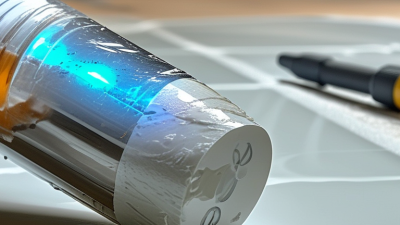
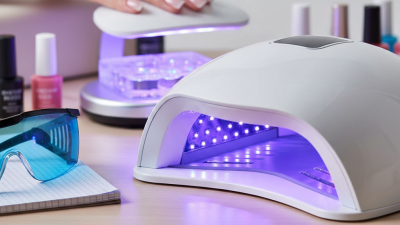
In 2026, global buyers are looking beyond brightness when selecting a Uv Led Curing Light. They are comparing wavelength, irradiance, dose uniformity, cooling, service life, and production compatibility. A compact spot system may cure a dental composite precisely, while a flood system can cover printed electronics across a wider surface. Conveyor units serve continuous manufacturing, and fiber-coupled designs reach narrow or irregular work areas. Each type solves a different problem.
Dr. Sean O’Brien, a UV curing technology consultant, describes the central issue clearly: “UV LED curing is a process technology, not simply a lamp replacement.” That warning deserves attention. The correct device depends on the photoinitiator, substrate, coating thickness, working distance, and required cycle time. Buyers should request measured irradiance and dose data, not rely only on attractive wattage claims. They should also examine beam profiles, replacement costs, safety controls, and technical support.
A neat classification can mislead.
Real production lines are rarely simple. A lamp that performs well on a test coupon may struggle on a textured part or heat-sensitive polymer. I have seen specifications look impressive until distance reduced the delivered dose. That is why this guide compares the leading Uv Led Curing Light types through practical operating details, not marketing language. It considers global purchasing realities, including voltage compatibility, documentation quality, calibration practices, and local support. Some recommendations may still require reconsideration after on-site trials. Careful validation remains essential.
UV LED Curing Light: Definition, Working Principle, and Core Components
UV LED Curing Light: Definition, Working Principle, and Core Components
A UV LED curing light is a solid-state system that uses ultraviolet radiation to harden inks, coatings, adhesives, or resins. Unlike thermal drying, curing creates a chemical reaction called photopolymerization. Photoinitiators absorb specific UV wavelengths and form reactive molecules. These molecules link liquid components into a solid film.
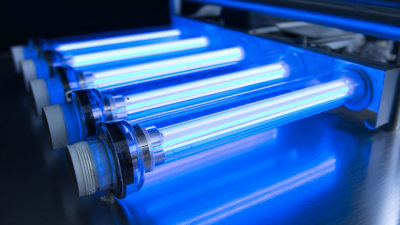
Most systems use 365, 385, 395, or 405 nanometer LEDs. The correct wavelength depends on the photoinitiator and material thickness. A typical unit includes LED chips, a circuit board, optics, a heat sink, a cooling fan, a power supply, and control software. The optical lens shapes the beam. The thermal path protects output stability. Heat still matters.
Industry data shows strong demand. MarketsandMarkets estimates the UV LED market could grow from about USD 1.1 billion in 2023 to USD 1.9 billion by 2028, with an 11.5% compound annual growth rate. Yole Group also identifies curing as a major UV LED application, alongside disinfection and analytical equipment. These figures support wider adoption, but they need careful reading. Market forecasts differ by scope and region.
In practical testing, irradiance is measured in watts per square centimeter, while dose equals irradiance multiplied by exposure time. A higher reading does not always mean better curing. Shadowed areas, aging LEDs, poor cooling, and mismatched photoinitiators can produce tacky surfaces. This is where specifications can mislead. Global buyers should request measured data, optical uniformity results, thermal limits, and material-specific curing evidence.
Performance Factors for Global Buyers to Compare
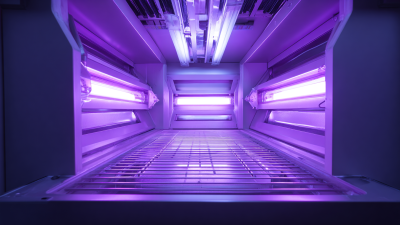
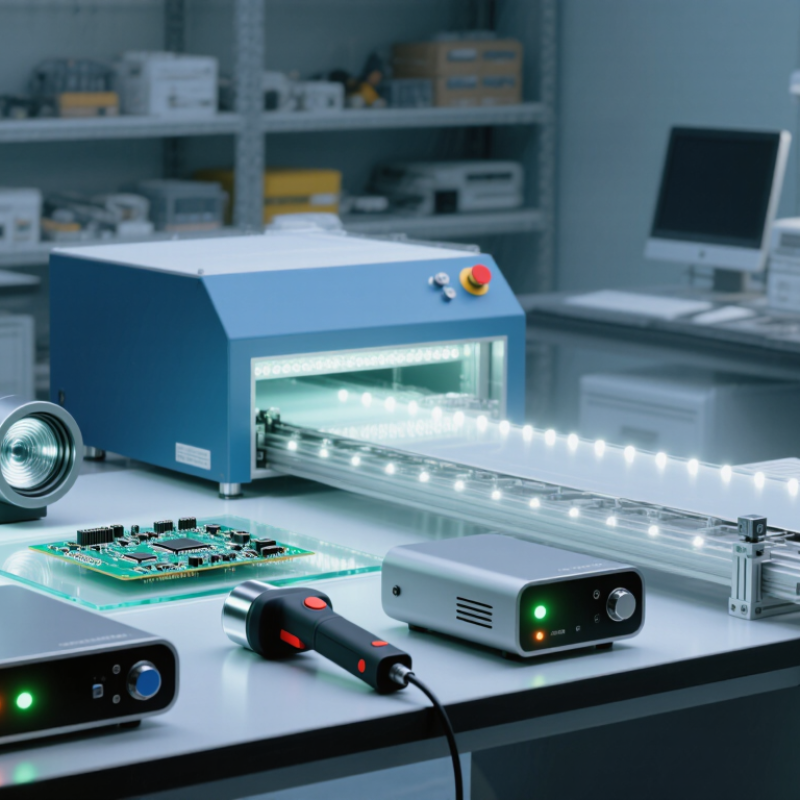
Global buyers compare UV LED curing light types by application, not appearance. Spot systems suit small, precise assemblies. Flood systems cover wider surfaces. Conveyor units support continuous production, while fiber-coupled designs reach narrow or recessed areas.
Wavelength matters. Common options include 365, 385, 395, and 405 nanometres. The correct range depends on the photoinitiator and material chemistry. Irradiance, measured in W/cm², shows curing intensity. Dose, measured in J/cm², combines intensity with exposure time. A 2024 RadTech UV+EB Technology Roadmap highlights growing interest in LED curing for lower heat and process control. MarketsandMarkets’ 2024 UV LED analysis also forecasts strong global growth through 2029. These reports indicate demand, but laboratory results can mislead production buyers. Real parts may absorb light unevenly.
Tips: Request irradiance maps, not only peak values. Test the thickest section. Check dose at the working distance. Ask for thermal data, spectrum stability, and maintenance records. The U.S. Department of Energy’s solid-state lighting research guidance stresses efficiency, thermal management, and lifetime testing. Those factors remain practical purchasing filters. A cooler housing is not automatically better. Poor uniformity can leave a glossy surface and an under-cured interior. That failure is easy to miss.
Operational details also matter. Compare curing width, conveyor speed, control interfaces, shielding, replacement costs, and calibration methods. Buyers should verify independent test conditions. A quoted lifetime may assume ideal temperatures. It may not match dusty factories or frequent power cycling. That gap deserves attention.
2026 Top UV LED Curing Light Types for Global Buyers
Performance comparison based on representative midpoints of commonly published industry operating ranges. Actual results vary with resin chemistry, working distance, exposure time, and substrate transparency.
Peak irradiance indicates available curing intensity, while typical cured depth reflects the approximate thickness achievable under suitable material and exposure conditions. Wavelengths shown are common UV LED operating bands.
Applications, Safety Standards, and Selection Criteria in 2026
2026 Top UV LED Curing Light Types for Global Buyers
UV LED curing systems in 2026 mainly use spot, flood, and linear lights. Spot systems suit small adhesive joints and electronic components. Flood lights cover wider surfaces, such as coatings, inks, and medical-device assemblies. Linear systems support continuous production lines and roll-to-roll materials. Most curing work uses UV-A wavelengths between 365 and 405 nanometers. The correct wavelength must match the photoinitiator, not simply the product label.
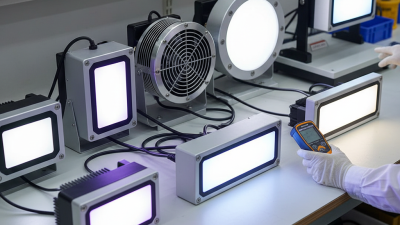
Applications vary widely. Optical adhesives need stable intensity and accurate exposure time. 3D printing requires uniform energy across each layer. Industrial coatings demand controlled dose, cooling, and repeatable conveyor speed. In production trials, operators often measure irradiance at the work surface with a calibrated radiometer. A bright lamp is not always effective. A higher wattage number can mislead.
Safety selection deserves equal attention.
Buyers should request photobiological risk information under IEC 62471 and verify applicable local workplace exposure limits. Enclosures, interlocks, warning labels, and suitable UV-rated eye protection reduce unnecessary exposure. Ventilation may also matter because some curing materials release vapors. Selection should compare wavelength tolerance, irradiance, dose consistency, heat management, maintenance access, and control integration. I still treat datasheets cautiously. Real output can decline with distance, dust, temperature, or aging LEDs. A small validation test using the actual material is wiser than relying on specifications alone.