Why Use Ultraviolet Light Lamp for Disinfection?
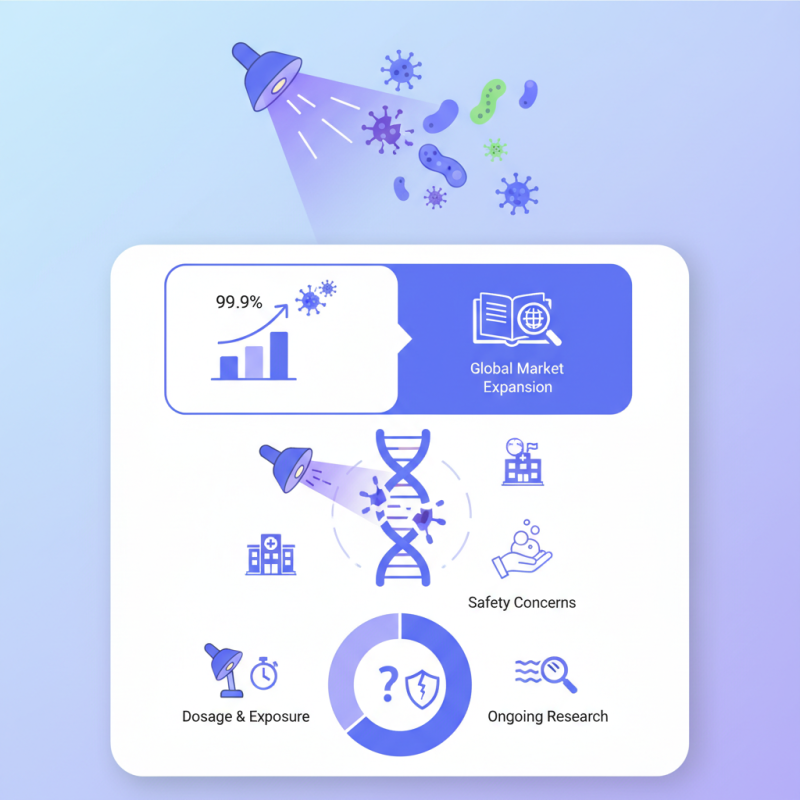
Ultraviolet Light Lamps have garnered significant attention for their disinfection capabilities. Recent studies indicate that these lamps can reduce up to 99.9% of pathogens. According to the Global Ultraviolet Light Disinfection Market Report, this technology is expanding rapidly, driven by the need for effective hygiene solutions. Dr. Emily Harris, an expert in UV technology, states, "Ultraviolet Light Lamps are transformative tools for public health."
The effectiveness of Ultraviolet Light Lamps lies in their ability to inactivate bacteria and viruses. They emit UV-C light, penetrating the cell walls of pathogens. This process disrupts their DNA, preventing replication. Facilities like hospitals and schools are increasingly adopting this technology. However, some skeptics raise concerns about safety and efficacy. It's essential to approach UV disinfection with a critical eye.
Not all Ultraviolet Light Lamps are created equal. Understanding the appropriate dosage and exposure times is crucial. Some devices may not deliver consistent results. Users need to be vigilant in their application. As adoption increases, ongoing research will refine best practices. The journey for optimal disinfection continues, pushing the boundaries of this promising technology.
Overview of Ultraviolet Light and Its Properties for Disinfection
Ultraviolet (UV) light is a powerful disinfection tool that operates by disrupting the DNA of microorganisms. This process renders viruses and bacteria inactive. UV light falls in the electromagnetic spectrum between visible light and X-rays. Notably, UV-C, with wavelengths ranging from 200 to 280 nanometers, is most effective for disinfection purposes. According to the Centers for Disease Control and Prevention, this spectrum can inactivate over 99.9% of pathogens in just a few seconds.
Research indicates that UV light can significantly reduce the risk of healthcare-associated infections. A study published in the American Journal of Infection Control revealed that UV disinfection cut down rates of Clostridium difficile infections in hospital settings by more than 50%. However, the effectiveness of UV light depends on the intensity, duration of exposure, and distance from the target surface. Shadows or obstacles can reduce effectiveness, often requiring multiple applications.
Despite its advantages, there are important considerations. UV light can be harmful to human skin and eyes. Proper safety measures are essential to prevent accidental exposure. Additionally, reliance solely on UV disinfection may lead to complacency in routine cleaning practices. Balancing various cleaning methods is crucial for an effective disinfection strategy.
Mechanisms of UV Light: How It Kills Microorganisms Effectively
Ultraviolet (UV) light is an effective tool for disinfection. It works by damaging the DNA and RNA of microorganisms. When exposed to UV light, bacteria and viruses cannot reproduce. This significantly reduces their presence in various environments. A study from the Environmental Protection Agency (EPA) indicates that UV light can inactivate up to 99.9% of pathogens within minutes.
The mechanisms of UV light are fascinating. It emits short wavelengths that penetrate microbial cell walls. Once inside, the energy disrupts molecular bonds. This process makes it challenging for microorganisms to survive or thrive. For instance, the World Health Organization (WHO) highlights the efficacy of UV light in treating drinking water. However, there is a critical aspect to consider. Not all surfaces and materials respond the same way to UV exposure. Shadows, surfaces, and distances can influence effectiveness.
While UV lamps are promising, they also have limitations. For one, improper use can lead to incomplete disinfection. Moreover, prolonged exposure can pose hazards to human skin and eyes. It's essential to understand these risks. Research shows that safety guidelines need to be followed closely. More studies are required to refine usage protocols, ensuring safety and efficacy in real-world applications.
Applications of UV Disinfection in Healthcare and Environmental Settings
Ultraviolet (UV) light has gained popularity as an effective disinfection method.
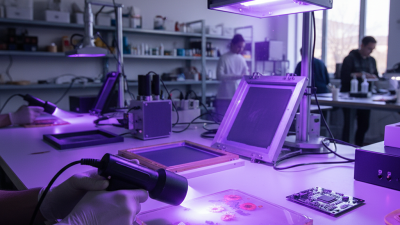
In healthcare, it is used to sanitize surfaces, tools, and even air. For example, UV lamps are commonly placed in operating rooms.
They help reduce the risk of infections. The light kills bacteria and viruses
without the use of chemicals. This is particularly important for sensitive environments like hospitals.
Environmental settings also benefit from UV disinfection. Water treatment plants
utilize UV light to eliminate harmful pathogens. This process is crucial for ensuring safe drinking water.
Additionally, public spaces, such as schools and offices, are using UV disinfection systems. These systems can reduce the spread of illnesses
by cleaning high-touch surfaces effectively. However, there's a lingering question
about the limitations of UV disinfection. It may not penetrate shadowed areas well. Thus, proper application is vital to achieve
the desired outcome.
Despite its advantages, UV disinfection poses some risks. Prolonged exposure to UV light can be
harmful to human skin and eyes. This requires caution in usage. Operators must follow safety protocols closely. Responsible implementation
is key to maximizing benefits while minimizing risks in both healthcare and environmental settings.
Industry Standards and Guidelines for UV Disinfection Efficacy
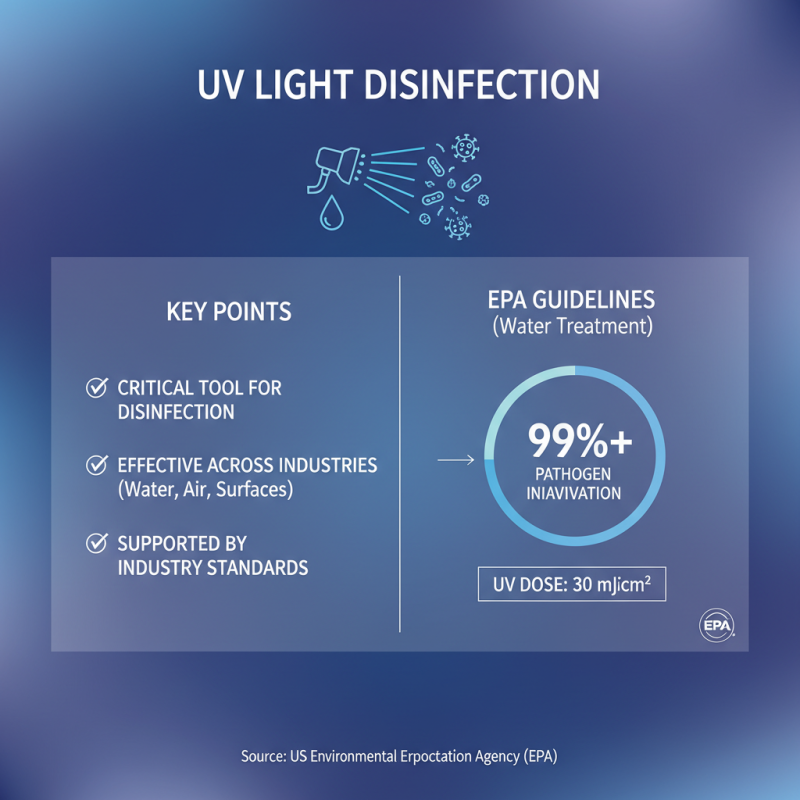
Ultraviolet (UV) light has emerged as a critical tool for disinfection across various industries. The efficacy of UV disinfection is supported by multiple industry standards. For instance, the US Environmental Protection Agency (EPA) recognizes UV light's role in reducing pathogens in water treatment. According to the EPA, a UV dose of 30 mJ/cm² effectively inactivates over 99% of bacteria and viruses.
Guidelines from the World Health Organization (WHO) suggest that UV-C light at wavelengths between 200 to 280 nm is particularly effective. Research indicates that the right intensity and exposure time can drastically impact results. However, implementing UV disinfection systems requires careful calibration. Misjudgment in dosage can lead to either overexposure—causing material degradation—or underexposure, which fails to disinfect effectively.
Moreover, prolonged exposure to UV light has potential health risks for humans. Ensuring safety measures during UV disinfection is crucial. Monitoring and adherence to relevant industry standards can help mitigate these risks while promoting effective disinfection practices. Notably, many facilities still struggle to maintain compliance with these guidelines, leading to inconsistent outcomes.
Comparative Analysis: UV Disinfection vs. Traditional Methods
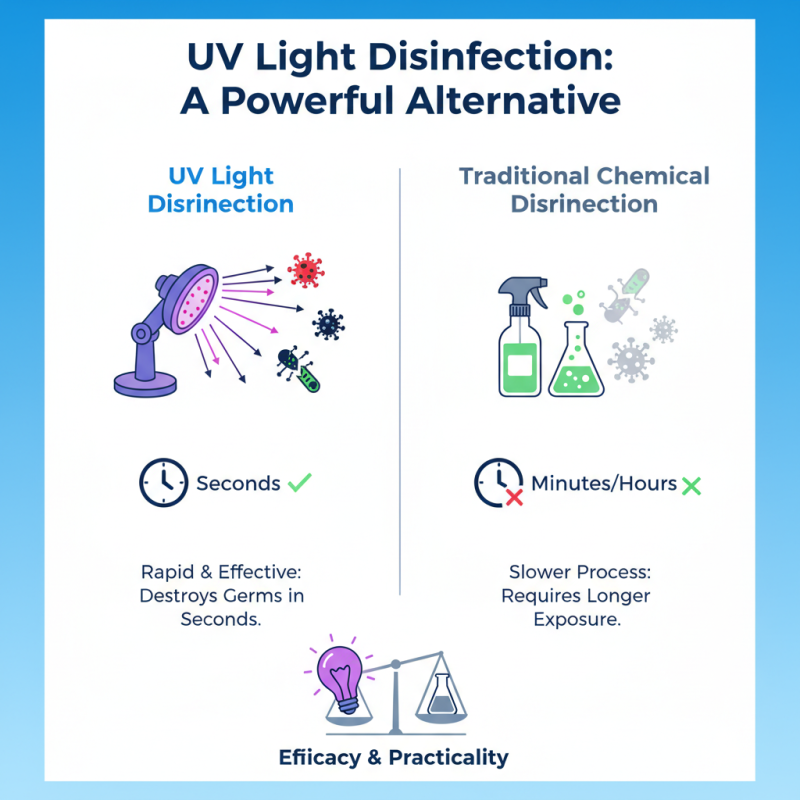
Ultraviolet (UV) light has gained attention in the field of disinfection. Many turn to this technology as a powerful alternative. It can effectively destroy bacteria and viruses in a matter of seconds, making it highly efficient. However, traditional methods such as chemical disinfection require longer exposure times. This difference raises important questions about efficacy and practicality.
On a practical level, using UV light is less labor-intensive. Once installed, it operates automatically. In contrast, chemical methods require careful handling and can leave harmful residues. Some people may worry about UV exposure. It’s essential to use this technology safely to avoid harming humans or pets. There are challenges to consider, especially in areas with shadows. UV light's effectiveness decreases in such spots, leaving potential gaps in disinfection.
For large spaces, traditional methods may still hold an advantage. They can cover every inch, ensuring thorough cleaning. Yet, they often come with health risks. It's crucial to compare the benefits and limitations. Both methods have their place, and understanding these can help make informed decisions about disinfection.