Top 5 Uv Curing Light Source Options for Your Needs?
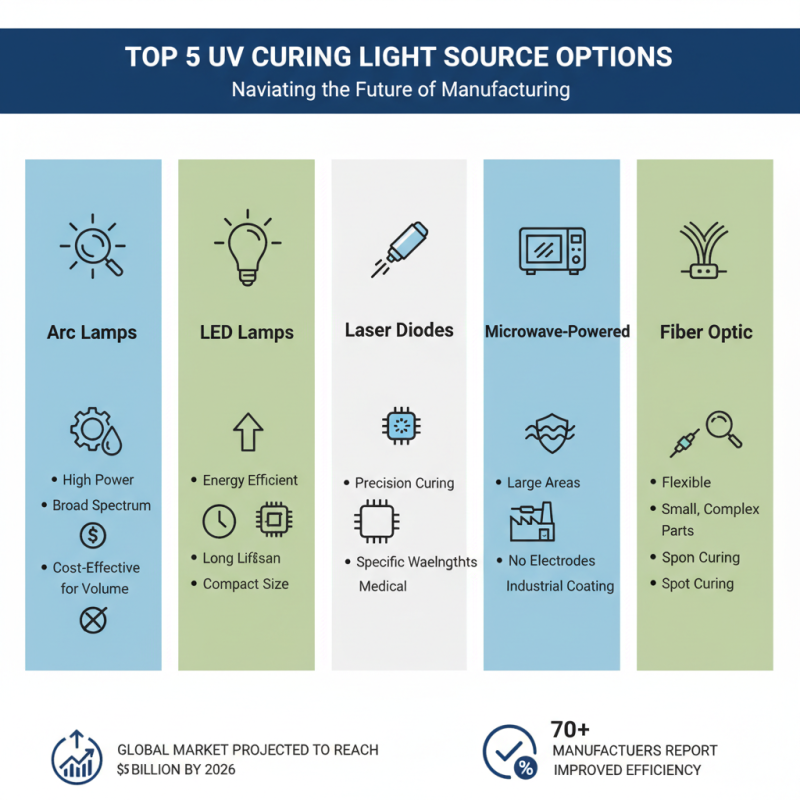
In today's manufacturing landscape, the choice of a reliable UV Curing Light Source is critical. The UV curing market is projected to reach $5 billion by 2026. This growth highlights a rising demand for efficient curing solutions across various industries. Understanding the different UV curing light source options can greatly impact production outcomes.
Companies are increasingly turning to UV technology. In fact, over 70% of manufacturers report improved efficiency with UV curing. However, selecting the right UV Curing Light Source can be challenging. There are multiple options to consider, each with unique benefits and drawbacks. Many businesses find it difficult to determine which light source aligns with their specific needs.
Incomplete information can lead to costly decisions. For example, some may overlook the importance of wavelength or intensity. This ignorance may result in subpar curing and quality issues. Hence, a thorough exploration of available options is essential for success. Let's delve into the top five UV Curing Light Source choices that cater to diverse requirements. Doing so will enhance your understanding and help you make informed decisions.
Understanding UV Curing Technology and Its Applications
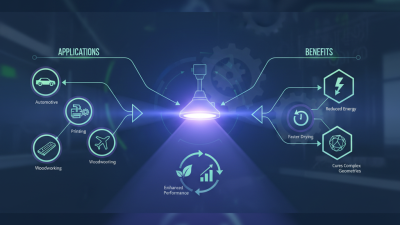
UV curing technology has transformed various industries by providing effective solutions for drying and hardening materials. This process uses ultraviolet light to trigger photochemical reactions, enabling rapid curing of inks, coatings, and adhesives. As a result, products can be finished in a fraction of the time compared to traditional methods. Businesses can benefit from increased efficiency and stronger results.
Understanding the different applications of UV curing technology is crucial. It is widely used in printing, automotive, and electronics. However, not all UV lights are the same. Factors like intensity, wavelength, and energy type can drastically affect outcomes. For instance, choosing the wrong wavelength might result in incomplete curing or surface imperfections.
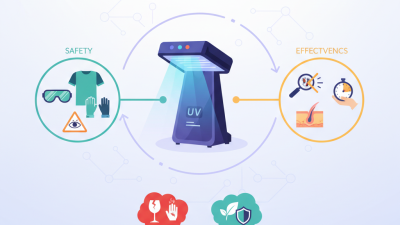
Many users may overlook these essential details. Some may focus solely on speed without considering adhesion quality. Others may underestimate the need for safety measures. It is important to find a balance between efficiency and effectiveness. Overall, exploring UV curing technology can lead to innovative solutions, but attention to details is vital for success.
Top 5 UV Curing Light Source Options for Your Needs
| UV Light Source Type |
Wavelength Range (nm) |
Output Power (W) |
Applications |
Lifespan (Hours) |
| Mercury Vapor Lamp |
200 - 400 |
100 - 400 |
Coating, Adhesive |
2000 |
| LED UV Light |
365 - 405 |
10 - 30 |
Printing, Gel Nails |
25000 |
| Hooded UV Lamp |
250 - 400 |
30 - 100 |
Graphic Arts, Coatings |
1500 |
| Handheld UV Lamp |
280 - 350 |
5 - 20 |
Repair, Spot Curing |
1000 |
| Quartz Lamp |
200 - 400 |
40 - 200 |
Binding Agents, Inks |
3000 |
Types of UV Curing Light Sources Available in the Market
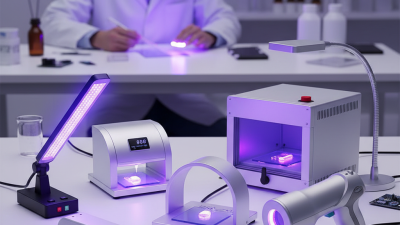
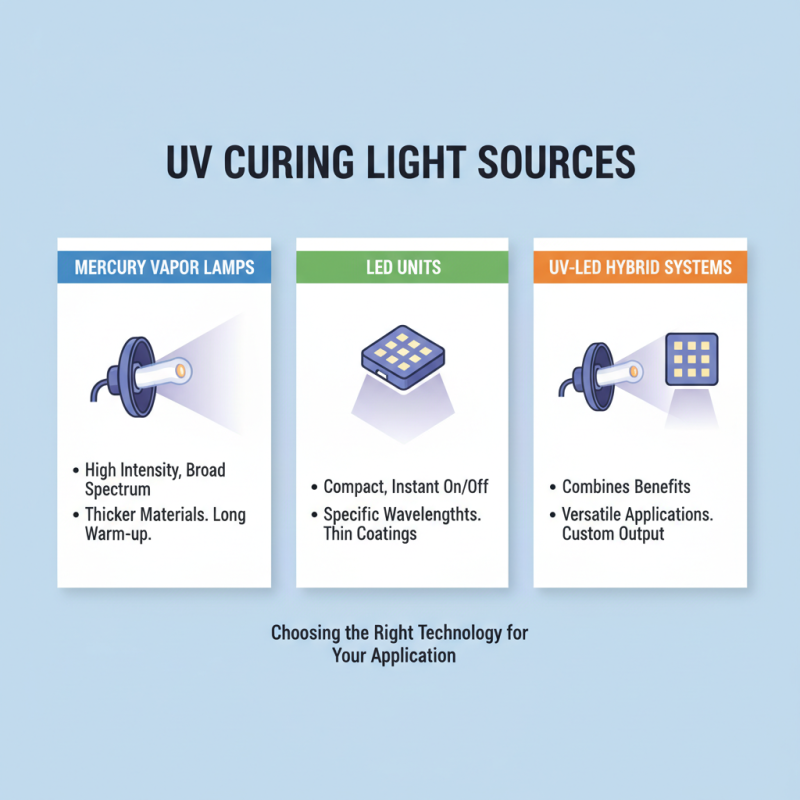
When considering UV curing light sources, understanding the types available is essential. There are three primary categories: mercury vapor lamps, LED units, and UV-LED hybrid systems. Each type offers distinct advantages tailored to various applications. For instance, mercury vapor lamps are known for high intensity and broad spectrum output, making them effective for thicker materials. However, they typically require longer warm-up times and can be bulky.
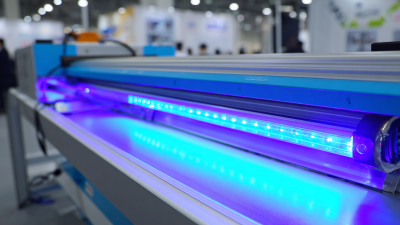
In contrast, LED units provide instant on/off capabilities. They emit less heat, resulting in lower energy consumption. According to a market report by Smithers, the global demand for LED curing systems is expected to grow at a rate of 25% annually. This rapid growth highlights their efficiency. Nevertheless, the initial investment can be steep for some users.
Hybrid systems offer a blend, combining the robustness of mercury with the efficiency of LED. They can be an optimal choice for facilities that need versatility across different curing applications. However, they may complicate maintenance and repair. As technology progresses, the possibilities expand, yet users must weigh the costs and benefits carefully.
Comparative Analysis of UV LED vs. Traditional Mercury Lamps
When evaluating UV curing light sources, the choice between UV LED and traditional mercury lamps is critical. UV LED technology is gaining traction thanks to its energy efficiency. Reports from industry analysts indicate that UV LEDs consume significantly less energy, up to 80%, compared to mercury lamps. Additionally, UV LEDs offer a longer lifespan, around 25,000 hours, versus the 1,000 hours typical for mercury lamps. This can lead to substantial long-term savings.
However, UV LED lights still face challenges. They typically have a higher initial cost compared to mercury lamps. Moreover, the wavelength options are limited. In some applications, this can restrict their effectiveness. Companies must weigh the higher upfront investment against the energy savings and longer lifespan. Finding the right balance can be challenging but is essential.
Tip: When considering UV curing options, analyze both short-term costs and long-term benefits.
The operational temperature of UV LEDs is another consideration. They can run cooler than mercury lamps, but overheating can occur if not managed properly. Cooling systems may be required for optimal performance. Misjudging the heat requirements could lead to inefficiencies.
Tip: Evaluate your specific needs and environment before making a choice.
Factors to Consider When Choosing a UV Curing Light Source
When choosing a UV curing light source, various factors must be considered. The type of materials you work with is crucial. Different substances react uniquely to UV light. For example, some materials cure faster than others. Evaluating the specific wavelength required for your project is essential. Not all UV lights emit the same spectrum of UV radiation.
Another consideration is the intensity of the light source. Higher intensity may speed up curing times but can also lead to overheating. Balance is key here. It is important to assess the curing depth needed for your applications. Shallower coatings may require less intense sources, while deeper ones might need more power.
Portability is also worth considering. Some projects might demand a more mobile solution. Having a lightweight unit can enhance flexibility but might compromise power. Lastly, think about maintenance. Regular upkeep can be critical for performance. A light source that is easy to maintain may save time and effort in the long run. Reflect on these factors carefully to find the right UV curing light source that meets your specific needs.
Top 5 UV Curing Light Source Options Comparison
Top Recommendations for UV Curing Devices Based on Specific Needs
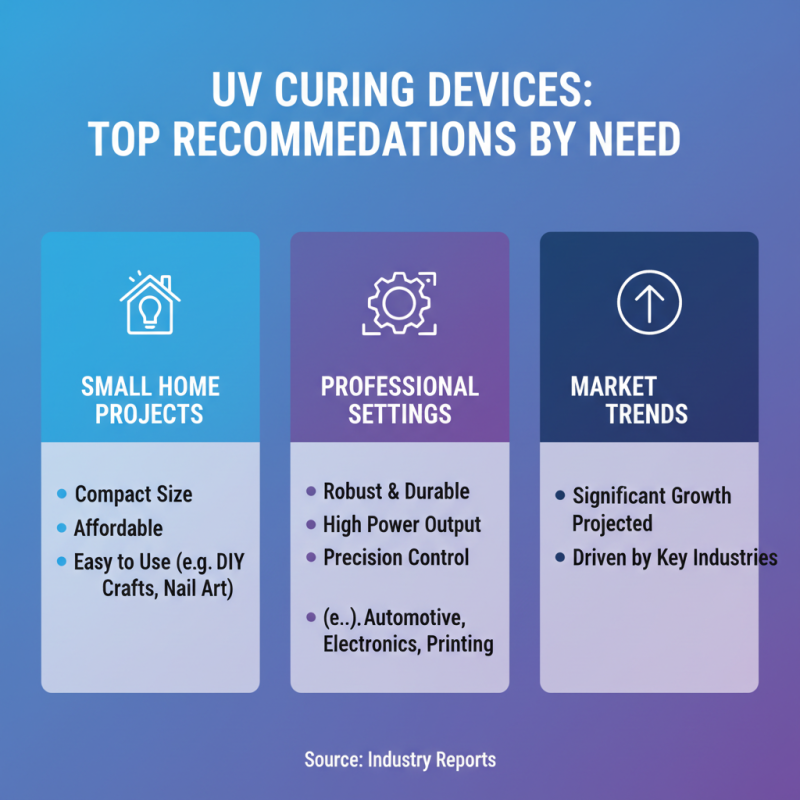
When considering the best UV curing devices, understanding your specific needs is crucial. Some users require light sources for small home projects, while others need robust solutions for professional settings. According to industry reports, the UV curing market is projected to grow significantly, primarily driven by industries like automotive, electronics, and printing. This growth underlines the importance of choosing the right device tailored to your requirements.
For hobbyists, a portable UV LED lamp can be ideal. These units are typically less powerful but work well for small-scale applications. A 2019 study highlighted that 70% of small businesses found success using these compact options. On the other hand, commercial operations often require high-output UV curing systems. These devices can cure a variety of materials quickly, enhancing productivity. However, the initial investment can be daunting.
**Tips:** Always evaluate the size of your projects. Compatibility with different materials is also crucial. Avoid devices that only perform well with specific substances. Some users may overlook maintenance, which can affect curing efficacy. Regular bulb replacement and cleaning can prevent issues and ensure optimum performance.