How to Choose the Best UV LED Curing Light for Your Needs?
Choosing the right UV LED curing light is crucial for achieving optimal results in various applications. Industry expert Dr. Emily Chen emphasizes, “The right UV LED curing light can significantly improve efficiency and quality.” Her insight underscores the importance of making informed choices.
When selecting a UV LED curing light, consider your specific needs. Different projects may require distinct light intensities and wavelength outputs. Factors like size, portability, and compatibility with materials also play a role. Understanding your workflow will help you navigate these options effectively.
Many users overlook the importance of proper testing before committing to a unit. Not all lights are created equal, and what works for one application may not work for another. Researching user reviews can reveal hidden strengths and weaknesses. Taking the time to choose the best UV LED curing light can enhance your work's quality and efficiency dramatically.
Understanding UV LED Curing Technology and Its Benefits
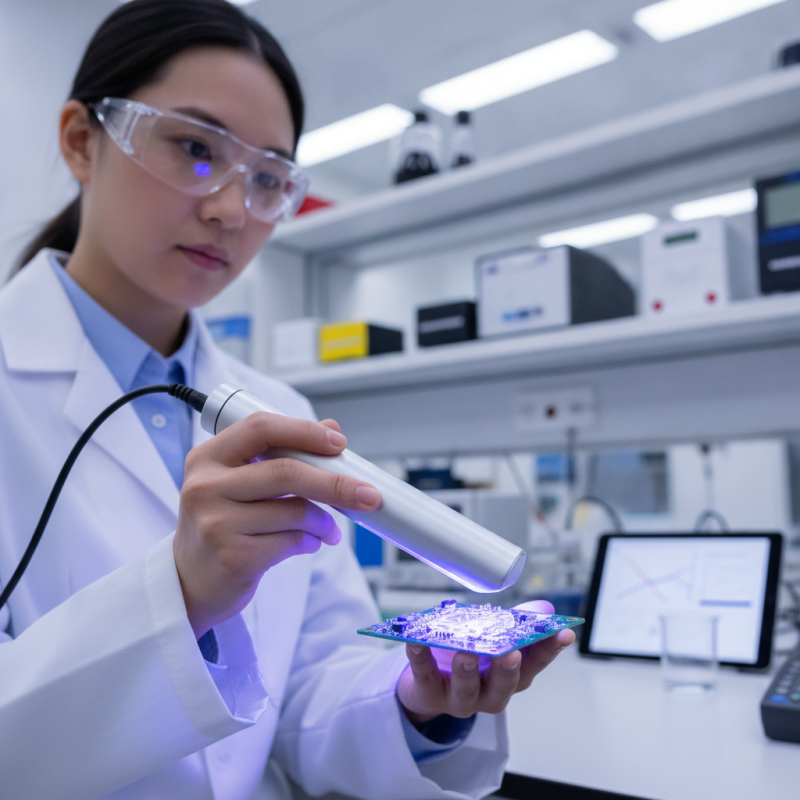
UV LED curing technology has gained significant traction in various industries, such as printing, dental, and electronics. This curing process uses ultraviolet light to convert inks, coatings, or adhesives into solid materials. A report by the UV LED Curing Market Analysis predicts a compound annual growth rate of 25.5% from 2021 to 2028, highlighting its growing significance and demand.
The benefits of UV LED curing are substantial. It offers faster curing times, typically ranging from a few seconds to minutes. Studies show that this method can reduce energy consumption by up to 50% compared to traditional curing methods. Furthermore, UV LED generates minimal heat, which is crucial when working with heat-sensitive substrates. However, not all applications can achieve optimal results with this technology. It's essential to consider material compatibility and potential limitations.
Several factors influence the effectiveness of UV LED curing. The wavelength of light emitted plays a critical role in determining cure efficiency. A mismatch in wavelength could lead to incomplete curing or defective products. While UV LED curing offers numerous advantages, it's vital to stay informed and prepared for its challenges. Continuous advancements show that industry experts must remain vigilant in monitoring developments and changes.
Identifying the Key Features of UV LED Curing Lights
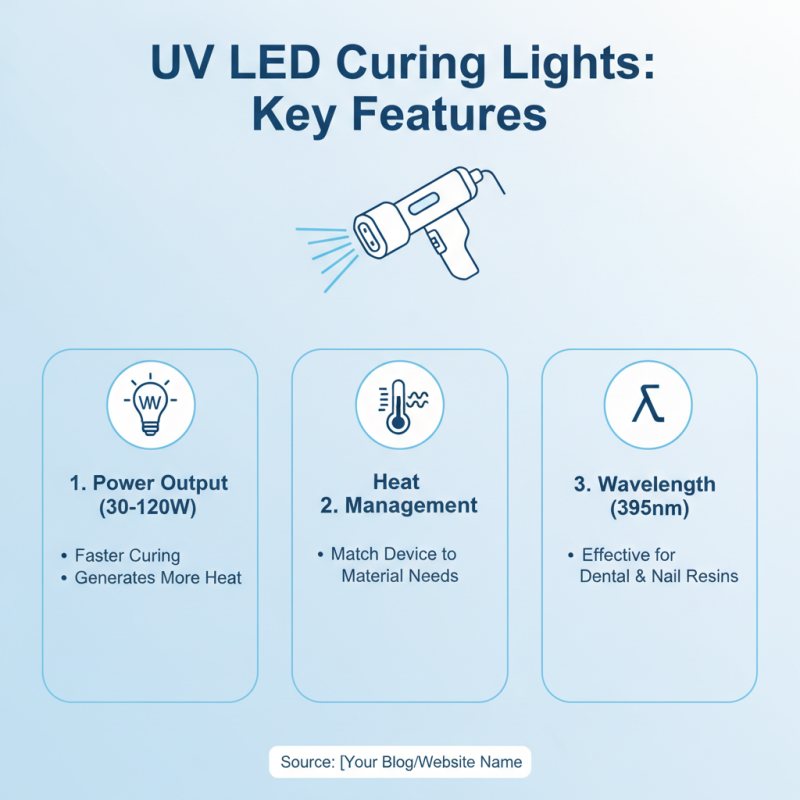
When selecting a UV LED curing light, understanding key features is essential. The power output is a crucial factor. Lights typically range from 30 to 120 watts. Higher wattage can cure materials faster, but it also generates more heat. Ensure your device fits your specific curing needs without overheating your materials. For instance, studies indicate that LEDs at 395 nm wavelength are effective for various resins used in dental and nail applications.
Consider the size of the curing area. A larger light unit cures more area but may be heavier. Some users prefer portability, especially for mobile applications. Ease of use is another vital aspect. An intuitive control panel can save time during operations. According to recent industry reports, user-friendly designs improve efficiency in professional settings.
**Tips:** Always check the light's compatibility with the materials you intend to cure. Regularly review curing times to avoid under- or over-curing your projects. Evaluate different brands based on user reviews and technical specifications. It’s worth experimenting with various models to determine which best fits your workflow.
Evaluating Your Specific Curing Needs and Applications
When selecting a UV LED curing light, assessing your specific curing needs is crucial. Different applications require different curing intensities and wavelengths. For instance, dental materials often need wavelengths around 400-420 nm, while some industrial adhesives perform better at 365 nm. Understanding these specifics can significantly influence your choice.
Consider the efficiency of your curing process. A report by the RadTech organization noted that efficient UV LED curing can reduce energy consumption by 60% compared to traditional methods. This can lead to significant cost savings over time. However, determine whether speed or depth of cure is more critical for your application. Some processes may sacrificially reduce speed for deeper penetration.
Additionally, think about the environment in which you'll be using the curing light. Factors like workspace temperature and humidity may impact the curing performance. An article in the Journal of Applied Polymer Science highlighted that inconsistent environmental conditions could lead to unpredictable results. Evaluating these elements is vital for achieving reliable curing performance.
How to Choose the Best UV LED Curing Light for Your Needs?
| Curing Application |
Wavelength (nm) |
Light Power (mW/cm²) |
Curing Time (seconds) |
Energy Consumption (W) |
| Nail Art |
365 |
20 |
30 |
12 |
| 3D Printing |
405 |
50 |
15 |
20 |
| Industrial Coating |
395 |
80 |
10 |
30 |
| Adhesives |
350 |
60 |
20 |
25 |
| Dental Applications |
420 |
70 |
25 |
15 |
Comparing Different Brands and Models of UV LED Curing Lights
When selecting a UV LED curing light, comparing different brands and models is crucial.
Research shows that the curing efficiency often varies among devices. A recent study indicated that some lights can cure materials up to 25% faster than others.
This significant difference underlines the importance of understanding specifications, such as wavelength range and power output.
Cost is also a factor to consider. Many users report that more expensive models do not always outperform budget options.
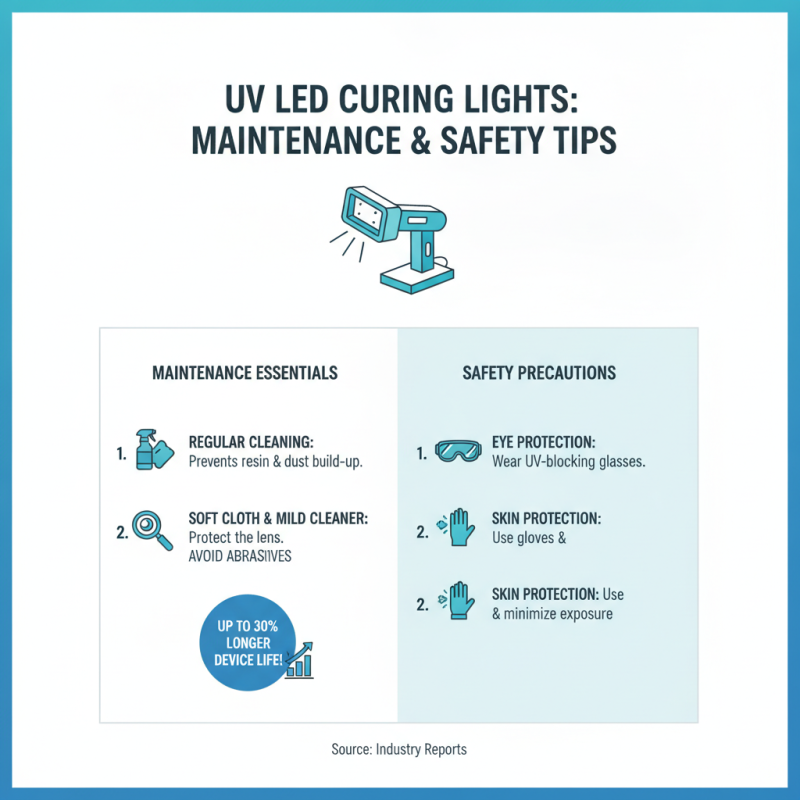
While the initial investment is essential, long-term performance and durability could matter even more. Reports have highlighted that consistent maintenance can extend the lifespan of budget devices, making them more reliable over time.
User reviews and industry ratings offer valuable insights. Many professionals emphasize the need for hands-on experience when evaluating a curing light's performance.
Some users express frustration with inconsistent curing results. These reflections can guide potential buyers in making informed decisions. Understanding your specific needs is vital to finding the right fit for your work environment.