Best Uv Led Curing Lamp for Efficient Curing Solutions?
In recent years, the demand for efficient curing solutions has surged across various industries. Among the innovative tools available, the Uv Led Curing Lamp stands out for its versatility and effectiveness. These lamps utilize advanced technology to cure a wide range of materials, from inks to adhesives. However, choosing the best Uv Led Curing Lamp can be overwhelming due to numerous options.
Understanding your specific needs is crucial. Not every lamp performs equally in different applications. Factors like power output, wavelength, and lamp design play significant roles. Users sometimes overlook these details, leading to less-than-optimal results. A well-chosen Uv Led Curing Lamp can improve workflow efficiency and product quality.
As the market evolves, keeping up with the latest advancements in Uv LED technology is essential. Some products may not deliver on their promises, which calls for critical evaluation. Reliable information from trusted sources can guide your decision-making process. A thoughtful approach to selecting a Uv Led Curing Lamp can enhance your curing processes and boost overall productivity.
Factors to Consider When Choosing a UV LED Curing Lamp
When choosing a UV LED curing lamp, several factors are critical for achieving efficient and effective curing. One key consideration is the wavelength of the light emitted. Different applications require specific wavelengths for optimal curing. For instance, most UV curing processes operate best at 365 nm or 395 nm. Research shows that the right wavelength can significantly improve curing speed and enhance the final product's adhesion properties.
Another important factor is the power output of the lamp. Higher intensity lamps can cure materials faster and more uniformly, reducing energy costs. According to industry reports, lamps with at least 50W per cm are preferable for most applications. However, wattage alone does not guarantee efficiency. The lamp's design and cooling system also play significant roles in performance and longevity. An inefficient lamp can lead to uneven curing and wasted materials.
Finally, the lamp's durability and lifespan affect long-term costs. Continuous use can degrade lamp performance over time, leading to increased maintenance expenses. It's vital to consider the expected lifespan and maintenance requirements when selecting a UV LED curing lamp. Regularly monitoring lamp performance can help users adjust their processes and ensure optimal curing results.
Best UV LED Curing Lamp for Efficient Curing Solutions
| Feature |
Description |
Importance |
| Wavelength |
Typical ranges are 365nm, 395nm |
Critical for the type of materials cured |
| Power Output |
Measured in watts; impacts curing speed |
Higher output can cure materials faster |
| Lamp Lifetime |
Typically ranges from 10,000 to 50,000 hours |
Indicative of long-term value |
| Size/Portability |
Consider size for workspace and transport |
Important for mobile or studio use |
| Cooling System |
Active or passive cooling options |
Prevents overheating and extends life |
| Curing Speed |
Time taken for full curing |
Critical for production efficiency |
| Safety Features |
Auto shut-off and UV protection |
Essential for operator safety |
Types of UV LED Curing Lamps and Their Applications
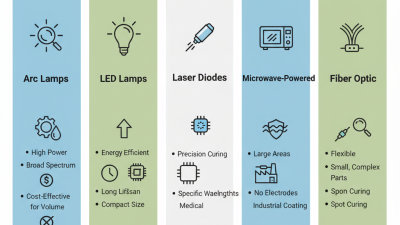
UV LED curing lamps are essential in various industries. They provide efficient, fast curing solutions for inks, coatings, and adhesives. Understanding the different types can help in selecting the right lamp for specific applications.
There are several types of UV LED curing lamps. Each serves unique purposes. For instance, spot curing lamps are ideal for small areas, while flood lamps cover larger surfaces. Some UV LED lamps are portable, making them convenient for on-site use. Others are designed for stationary setups in factories or printing facilities. The choices can be overwhelming.
In many cases, users overlook the importance of bulb wavelength. A mismatch can lead to ineffective curing. Additionally, aspects like energy consumption and heat generation play significant roles in performance. Many users might not realize that the ideal lamp varies based on material compatibility and environmental conditions. As technology evolves, staying informed is critical. Each selection carries implications for efficiency and quality.
Best UV LED Curing Lamp Applications by Type
Benefits of UV LED Curing Over Traditional Methods
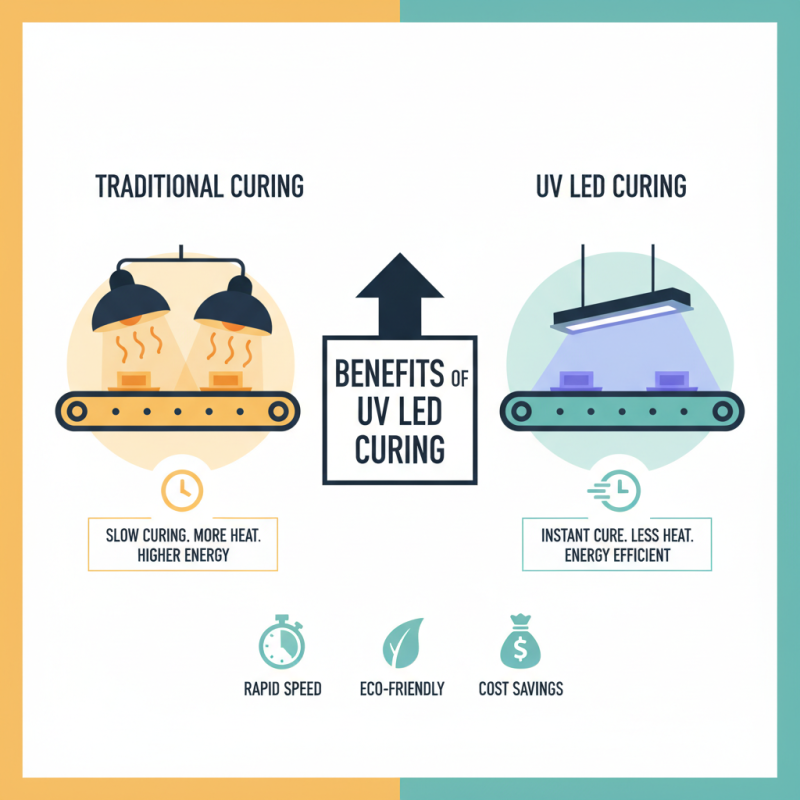
UV LED curing technology has emerged as a superior alternative to traditional curing methods. This innovative approach offers numerous benefits that enhance efficiency and effectiveness. One key advantage is the rapid curing time. UV LED lamps can cure materials almost instantaneously, saving valuable production time. This is critical in industries like printing and coatings, where speed is a priority.
Additionally, UV LED curing produces less heat, reducing the risk of damage to sensitive substrates. Traditional curing methods often generate excessive heat, which can warp or alter materials. In contrast, UV LED lights emit minimal heat, allowing for versatile application across various surfaces. This aspect not only improves the quality of the finished product but also broadens the scope of materials that can be cured.
Another important factor is energy efficiency. UV LED technology consumes less power compared to traditional UV lamps, leading to lower operational costs over time. However, it is essential to consider the initial investment in UV LED equipment, as it can be higher. Balancing cost against long-term savings requires thoughtful consideration. Organizations must weigh these factors before transitioning to UV LED curing solutions, ensuring they align with their production capabilities and financial strategies.
Maintenance Tips for Long-lasting UV LED Curing Lamps
Maintaining your UV LED curing lamp is crucial for its effectiveness and longevity. Regular care can prevent common issues and enhance performance. Here are a few essential tips to help ensure your lamp serves you well.
Cleaning the lamp regularly is vital. Dust and debris can accumulate on the surface, affecting the light output. Use a soft, lint-free cloth to wipe the lamp gently. Avoid harsh chemicals that could damage the surface. Remember to power off the lamp before cleaning. This simple act can prevent unnecessary malfunctions.
Overheating is another concern. Ensure proper ventilation around the lamp. If the lamp feels unusually hot, check for blockages that may hinder airflow. It’s essential to monitor its usage time. Extended sessions can lead to overheating and decreased lifespan. Always follow the manufacturer’s guidelines regarding usage and rest periods.
Be mindful of the lamp's bulbs. Inspect them regularly for signs of wear or decreased output. Replacing bulbs as needed can maintain optimal curing results. Tracking the hours of use can help anticipate replacements. These steps may seem minor but greatly impact the lamp's efficiency and durability. Making these habits a part of your routine can save time and money in the long run.
Top Brands and Models of UV LED Curing Lamps on the Market
When searching for the best UV LED curing lamps, it is essential to consider various models and brands. The UV LED curing lamp market is expected to reach $5 billion by 2026, growing at a CAGR of 10%. According to a recent market report, these lamps are increasingly favored for their energy efficiency and low heat emissions. Many technicians report quicker drying times compared to traditional UV lamps, often reducing production time significantly.
Several leading models stand out due to their performance and reliability. The ability to cure different materials efficiently makes these lamps versatile in various industries, such as printing and electronics. However, while most UV LED curing lamps offer impressive features, some users find inconsistency in curing when switching between materials. This highlights the importance of understanding lamp specifications and application requirements.
A study from the leading research group indicates that user satisfaction aligns closely with durability and ease of use. Many technicians note that while some high-end models excel in durability, they can be overly complex. This complexity may deter less experienced users. Balancing performance and usability is crucial for both manufacturers and end-users to ensure effective curing solutions across the board.